Introduction
Crypto prices can feel like they move before you even finish refreshing the page. That is exactly why eth brl matters for anyone in Brazil, or anyone tracking Ethereum’s value against the Brazilian Real.
At first glance, it looks simple: one number showing how much ETH is worth in reais. But behind that number is a moving mix of global Ethereum demand, dollar strength, Brazilian currency conditions, exchange liquidity, network activity, regulation, investor sentiment, and fees.
This guide explains eth brl in plain language, without hype. You will learn what the pair means, how conversions work, what affects the price, where fees appear, how to think about risk, and what Brazilian users should consider before buying, selling, swapping, or holding Ethereum.
Ethereum is not just a tradable crypto asset. It is a decentralized network for apps, tokens, smart contracts, and digital ownership, with ether as the asset used to pay network fees and support activity on the chain. Ethereum’s official site describes it as a global decentralized platform where users can control assets, data, and identity.
What Does eth brl Mean?
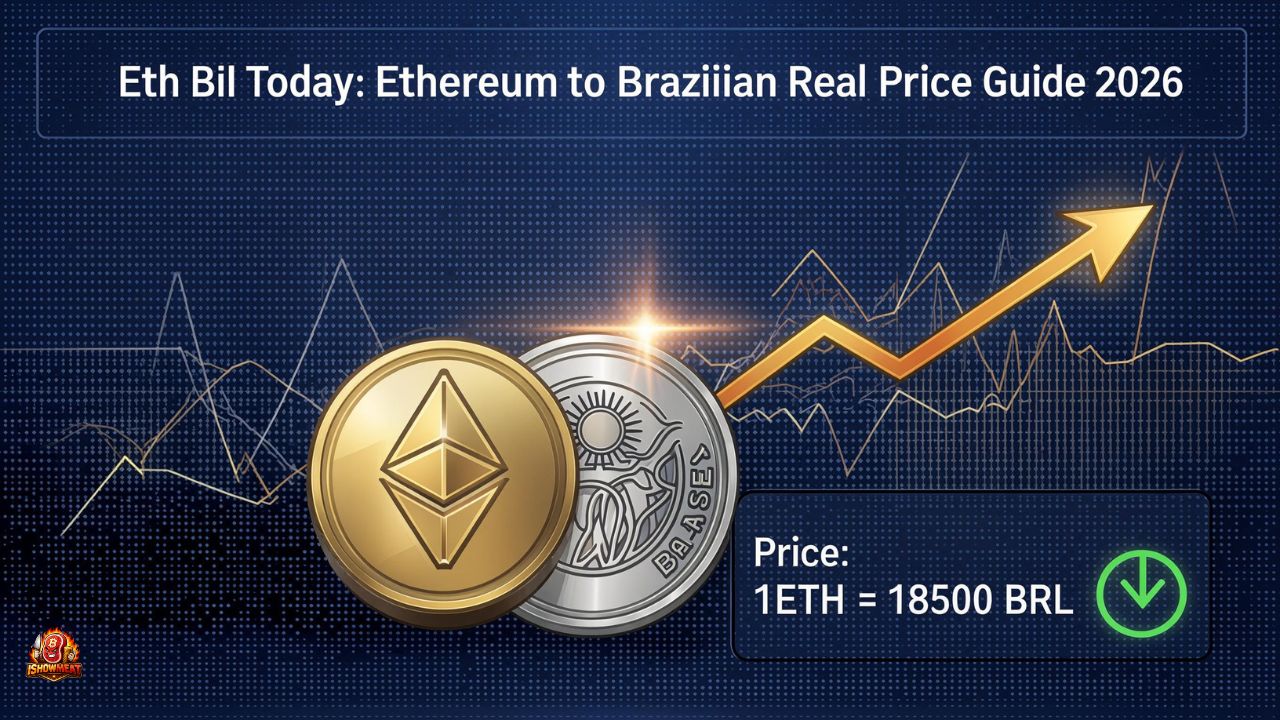
eth brl refers to the exchange value between Ethereum, commonly represented by ETH, and the Brazilian Real, represented by BRL. In practical terms, it tells you how many reais are needed to buy 1 ETH, or how many reais you may receive when selling 1 ETH.
For example, if ETH is quoted at R$10,000, then 0.10 ETH would be worth roughly R$1,000 before fees, spread, taxes, and any exchange-specific costs. The actual amount you receive may differ because crypto exchanges usually include a buy-sell spread, trading fee, withdrawal fee, or conversion margin.
Why Ethereum Has Value Beyond Price
Ethereum’s value is tied to more than speculation. The network supports smart contracts, decentralized finance applications, NFT standards, stablecoins, tokenized assets, gaming projects, and many other blockchain-based tools.
That does not mean ETH always rises in price. It simply means Ethereum has a broader role than being a digital coin sitting on an exchange screen. ETH is used to pay transaction costs on the network, and its demand can be influenced by how much activity happens across Ethereum and its wider ecosystem.
![Image: Ethereum network illustration showing smart contracts, DeFi, wallets, and Brazilian Real conversion]
A Clear Definition of ETH
ETH is the native crypto asset of Ethereum. It is used to pay transaction fees, interact with decentralized applications, transfer value, and participate in staking-related network security.
A Clear Definition of BRL
BRL is the currency code for the Brazilian Real, Brazil’s official currency. When people track Ethereum against BRL, they are looking at Ethereum’s value from a Brazilian currency perspective instead of only through the U.S. dollar.
How the ETH to BRL Conversion Works
The ETH-to-real conversion is usually calculated by combining the global ETH price with the current exchange value of the Brazilian Real. Many international crypto markets price ETH primarily in U.S. dollars, so the real-world BRL quote often reflects both ETH movement and foreign exchange movement.
A simplified example looks like this:
- ETH global price rises while BRL stays stable: ETH becomes more expensive in reais.
- ETH stays flat while BRL weakens against USD: ETH may still become more expensive in reais.
- ETH falls while BRL strengthens: the BRL price may fall faster.
- ETH rises while BRL weakens: the BRL price can move sharply upward.
This is why Brazilian users sometimes see ETH behave differently in reais than it appears to behave in dollars. The local currency layer matters.
Why eth brl Moves So Quickly
The eth brl price changes because both sides of the pair can move. ETH trades globally every day, around the clock. BRL, meanwhile, responds to interest rates, inflation expectations, trade flows, political risk, global dollar demand, and domestic economic signals.
That creates a double-moving pair. You are not only watching Ethereum; you are also watching the real. This is one reason crypto prices in local currencies can feel more dramatic than global dollar charts.
Main Price Drivers
Several factors commonly affect Ethereum’s value in reais:
- Global ETH demand
More demand for Ethereum can push ETH higher across major currencies. - Brazilian Real strength or weakness
A weaker real can make ETH more expensive locally, even if the dollar price of ETH is unchanged. - Crypto market sentiment
Bitcoin trends, ETF flows, institutional demand, and macro news can influence ETH. - Ethereum network activity
Higher usage across DeFi, stablecoins, token transfers, and apps can affect market attention. - Regulatory developments
Rules for crypto platforms, custody, taxation, and compliance can shape investor confidence. - Liquidity on local exchanges
A platform with thin liquidity may show less favorable prices than a larger, more active market.
Brazil’s Growing Role in Crypto
Brazil is one of the most important crypto markets in Latin America. Chainalysis reported that Brazil dominated LATAM crypto activity, receiving an estimated $318.8 billion in crypto value and ranking fifth in its 2025 Global Crypto Adoption Index.
This matters because strong local participation can improve awareness, increase competition among exchanges, and encourage better infrastructure. More users can also mean more demand for reliable conversion tools, secure wallets, clear pricing, and transparent regulation.
Brazil’s Central Bank has also moved toward clearer oversight of virtual asset service providers. In November 2025, it released regulations for the virtual asset market and stated that it would supervise the authorization process and related service providers.
How to Read a Live ETH BRL Chart
A live Ethereum BRL chart may look intimidating at first, but the basics are simple. You are looking at price history over time. The chart may show minutes, hours, days, weeks, months, or years.
Short-term traders often watch smaller timeframes, but long-term holders usually care more about broader market structure. A 5-minute candle can look dramatic while barely mattering on a yearly chart.
What to Look For
When reading a chart, focus on:
- Trend direction: Is price generally rising, falling, or moving sideways?
- Volume: Are many buyers and sellers active?
- Support zones: Where has price previously stopped falling?
- Resistance zones: Where has price previously struggled to rise?
- Volatility: How wide are the price swings?
- Spread: Is there a noticeable gap between buy and sell prices?
Charts are useful, but they are not guarantees. A clean-looking pattern can fail quickly when market news, liquidation events, macro data, or large orders enter the picture.
Understanding Fees, Spreads, and Hidden Costs
One of the biggest mistakes beginners make is comparing only the headline price. The displayed eth brl rate is not always the final rate you receive.
Crypto platforms may charge fees in several ways. Some are obvious, such as a listed trading fee. Others are less visible, such as a wider spread between the buy price and sell price.
Common Costs to Check
Before placing an order, look for:
- Trading fee
- Deposit fee
- Withdrawal fee
- Blockchain network fee
- Spread between buy and sell price
- Instant conversion markup
- Card or payment processing fee
- Minimum withdrawal amount
- Custody or service fees, if applicable
A platform with a slightly better displayed price may still be more expensive if its withdrawal fee or spread is high. Always compare the full transaction cost, not only the chart price.
Market Orders vs Limit Orders
A market order buys or sells immediately at the best available price. It is fast, but you may get a worse result during volatile moments or on platforms with lower liquidity.
A limit order lets you choose the price you are willing to pay or accept. It gives more control, but the order may not fill if the market does not reach your chosen price.
For beginners, limit orders can help reduce emotional buying. Instead of chasing candles, you decide your price in advance.
Wallets: Keeping Ethereum Safe
Buying ETH is only one part of the process. Keeping it safe is just as important. You can usually hold ETH on an exchange or withdraw it to a personal wallet.
An exchange wallet is convenient because buying, selling, and converting are easy. However, the platform controls the custody. A personal wallet gives you more control, but also more responsibility.
Custodial Wallets
A custodial wallet is managed by a platform. You log in with an account, and the company handles the private keys.
Benefits include convenience, customer support, and easier recovery. Risks include platform failure, account freezes, hacks, and withdrawal limits.
Self-Custody Wallets
A self-custody wallet gives you control of your private keys or seed phrase. This can be more secure when done correctly, but mistakes can be permanent.
Never share your seed phrase. Never type it into random websites. Never store it in plain text on your phone or email. If someone gets your seed phrase, they can take your funds.
Is eth brl Good for Long-Term Investors?
There is no universal answer. eth brl can be useful for long-term investors who want exposure to Ethereum while thinking in Brazilian reais. But Ethereum is volatile, and the BRL value can move sharply.
A long-term investor should think beyond today’s price. Consider your time horizon, emergency savings, risk tolerance, income stability, tax obligations, and whether you understand the asset.
Ethereum has a strong ecosystem, but it still faces risks: competition, regulatory pressure, smart contract exploits, market cycles, liquidity shocks, and technology changes. A responsible investor treats ETH as a high-risk asset, not a guaranteed path to wealth.
Practical Ways to Use ETH BRL Without Guessing
Many people enter crypto trying to catch the perfect bottom. That is extremely difficult. A more practical approach is to build a clear plan before buying.
A Simple Decision Framework
Ask yourself:
- Why am I buying ETH?
- Am I investing, trading, transferring, or using decentralized apps?
- How much can I afford to lose?
- Will I buy all at once or gradually?
- Where will I store it?
- What price or event would make me sell?
- Do I understand the tax and reporting rules that apply to me?
- Have I compared platform fees?
This type of thinking reduces impulsive decisions. It does not remove risk, but it helps you avoid buying only because the market feels exciting.
Dollar-Cost Averaging and Reais
Some Brazilian investors use dollar-cost averaging, even when investing in reais. The idea is simple: buy a fixed amount at regular intervals instead of trying to time one perfect entry.
For example, someone might buy R$100 or R$500 worth of ETH each month. When the price is high, the same amount buys less ETH. When the price is low, it buys more.
This strategy does not guarantee profit. It can still lose money in a long bear market. But it may reduce the stress of trying to predict short-term price movements.
Tax and Regulation Considerations in Brazil
Crypto regulation and tax rules can change, so users should verify current requirements with official sources or a qualified professional. Brazil has been developing a clearer framework for virtual asset service providers, including authorization and supervision by the Central Bank.
For individuals, the key point is simple: do not assume crypto activity is invisible or exempt. Buying, selling, swapping, receiving, or transferring digital assets may create reporting responsibilities depending on the amount, activity, and applicable law.
Keep records of:
- Purchase date
- Sale date
- BRL value at transaction time
- Fees paid
- Exchange used
- Wallet transfers
- Transaction IDs
- Profit or loss calculations
Good records make life easier later, especially if you trade often.
ETH, Stablecoins, and Local Currency Thinking
Many Brazilian crypto users do not only compare ETH with BRL. They may also compare ETH with USDT, USDC, BTC, or other trading pairs.
Still, the real matters because local expenses, income, taxes, and financial goals are usually measured in reais. Even if you trade through a dollar stablecoin, your final purchasing power may still depend on BRL.
This is why understanding eth brl is useful even for people who trade mostly in stablecoins. At some point, the question usually returns to local value: how much is this worth in reais?
Common Mistakes Beginners Make
Beginners often focus on price and ignore process. That can lead to avoidable losses.
Mistake 1: Buying Without Comparing Rates
Two platforms can show different prices at the same moment. The difference may come from liquidity, spread, fees, or market structure.
Mistake 2: Ignoring Withdrawal Costs
A cheap buy price is less attractive if withdrawing ETH costs too much.
Mistake 3: Sending ETH on the Wrong Network
Many platforms support multiple networks. Sending assets to the wrong chain or address can result in permanent loss.
Mistake 4: Treating Influencers as Financial Advisors
Social media can be useful for news, but it is also full of hype, paid promotion, and emotional predictions.
Mistake 5: Using Money Needed for Bills
Crypto volatility can be severe. Money needed for rent, food, debt payments, school fees, or emergencies should not be exposed to high-risk speculation.
Security Checklist Before Buying ETH
Use this checklist before making any serious transaction:
- Enable two-factor authentication.
- Use a strong, unique password.
- Confirm the exchange website URL.
- Avoid clicking sponsored phishing links.
- Test withdrawals with a small amount first.
- Save backup codes securely.
- Never share your seed phrase.
- Verify wallet addresses carefully.
- Keep records of every transaction.
- Do not rush under pressure.
Most crypto losses do not happen because someone misunderstood a chart. They happen because of scams, rushed decisions, weak security, or sending funds incorrectly.
How Beginners Can Track eth brl Responsibly
The best tracking habit is consistency. Use reputable sources, compare more than one price feed, and understand whether you are viewing a mid-market estimate or an actual tradable quote.
CoinMarketCap, for example, lists ETH-to-BRL conversion data and updates its converter in real time, but actual exchange execution prices may differ based on venue, fees, and liquidity. On May 26, 2026, its ETH-to-BRL page showed live values around the R$10,500–R$10,600 range, with the page noting real-time updates and recent percentage changes.
That number should be treated as a snapshot, not a promise. By the time you trade, the market may already be different.
What Makes Ethereum Different From Bitcoin?
Bitcoin is often seen as digital scarcity and a store-of-value asset. Ethereum is more like a programmable settlement network. It can move value, but it can also run smart contracts.
This difference matters because ETH demand can come from multiple areas: investors, app users, developers, stablecoin activity, decentralized exchanges, token projects, NFTs, and layer-2 networks.
Ethereum also shifted from proof-of-work to proof-of-stake in 2022 through the Merge, a major network upgrade that significantly reduced energy consumption and changed how the network is secured.
Should You Buy ETH in Reais or Dollars?
For most Brazilian users earning and spending in reais, buying through BRL can be simpler. It reduces the need to manually convert money through several steps.
However, advanced users may compare BRL markets with stablecoin markets. Sometimes the total cost differs depending on deposit method, spread, liquidity, and withdrawal options.
The best choice depends on your platform, fees, liquidity, and goal. A long-term buyer may prioritize simplicity and safety. A frequent trader may care more about execution cost and order book depth.
Red Flags When Choosing a Platform
Not every platform deserves your trust. Be cautious if you notice:
- Unrealistic guaranteed returns
- No clear company information
- Poor withdrawal reputation
- Pressure to deposit quickly
- Complicated fee disclosures
- No security features
- Fake celebrity endorsements
- Unlicensed or unclear operations
- Customer support that avoids direct answers
A reliable platform should make pricing, fees, risks, custody, and withdrawal rules easy to understand.
FAQ
What is eth brl?
eth brl is the quoted value of Ethereum in Brazilian reais. It shows how much 1 ETH is worth in BRL, or how much BRL you may receive when selling ETH before fees and spreads.
Why does Ethereum’s price in reais change so much?
Ethereum changes in reais because ETH moves globally and the Brazilian Real also moves against major currencies. When both move at once, the local BRL price can shift quickly.
Is ETH the same as Ethereum?
Not exactly. Ethereum is the blockchain network. ETH is the native asset used on that network for fees, transfers, staking-related activity, and interaction with applications.
Can I buy less than 1 ETH?
Yes. ETH is divisible, so users can buy small fractions. Many platforms allow purchases based on a BRL amount rather than requiring a full ETH.
What is the safest way to store ETH?
There is no single safest option for everyone. Exchanges are convenient, while self-custody wallets offer more control. For larger amounts, many users prefer hardware wallets, careful backups, and strong personal security habits.
Why is the price different across exchanges?
Prices differ because of liquidity, fees, spreads, order books, payment methods, and local demand. Always compare the final amount you receive, not just the displayed headline price.
Does Brazil regulate crypto?
Brazil has been developing rules for the virtual asset market, including Central Bank supervision of virtual asset service providers. Users should check current rules and consult a qualified professional for tax or legal advice.
Is Ethereum a low-risk investment?
No. Ethereum is a high-risk digital asset. It has a large ecosystem, but its price can fall sharply, and users face risks from volatility, scams, regulation, custody mistakes, and market cycles.
Conclusion
The eth brl rate is more than a number on a crypto chart. It is where Ethereum’s global market meets Brazil’s local currency reality. Understanding that relationship helps you read prices more clearly, compare platforms more carefully, and avoid decisions based only on emotion.
Ethereum may continue to play an important role in crypto, smart contracts, DeFi, stablecoins, and digital asset infrastructure. But every opportunity comes with risk. The smartest approach is to stay curious, protect your security, track real costs, keep good records, and never invest more than your financial life can handle losing.