

If you like the idea of earning crypto from everyday purchases, the Coinbase Visa Card is one of the better-known options in the United States. It connects your Coinbase account to a Visa debit card experience, letting eligible users spend U.S. dollars, USDC, or supported crypto while potentially earning crypto rewards.
But this is not a normal cash-back card, and it is not risk-free. Crypto rewards can fluctuate in value. Spending crypto can create tax records. Fees may be low for card spending, but spreads, ATM costs, and account limitations still matter.
This guide explains how the Coinbase Card works, who it may suit, where it falls short, and what to check before using it for groceries, subscriptions, travel, or everyday purchases.
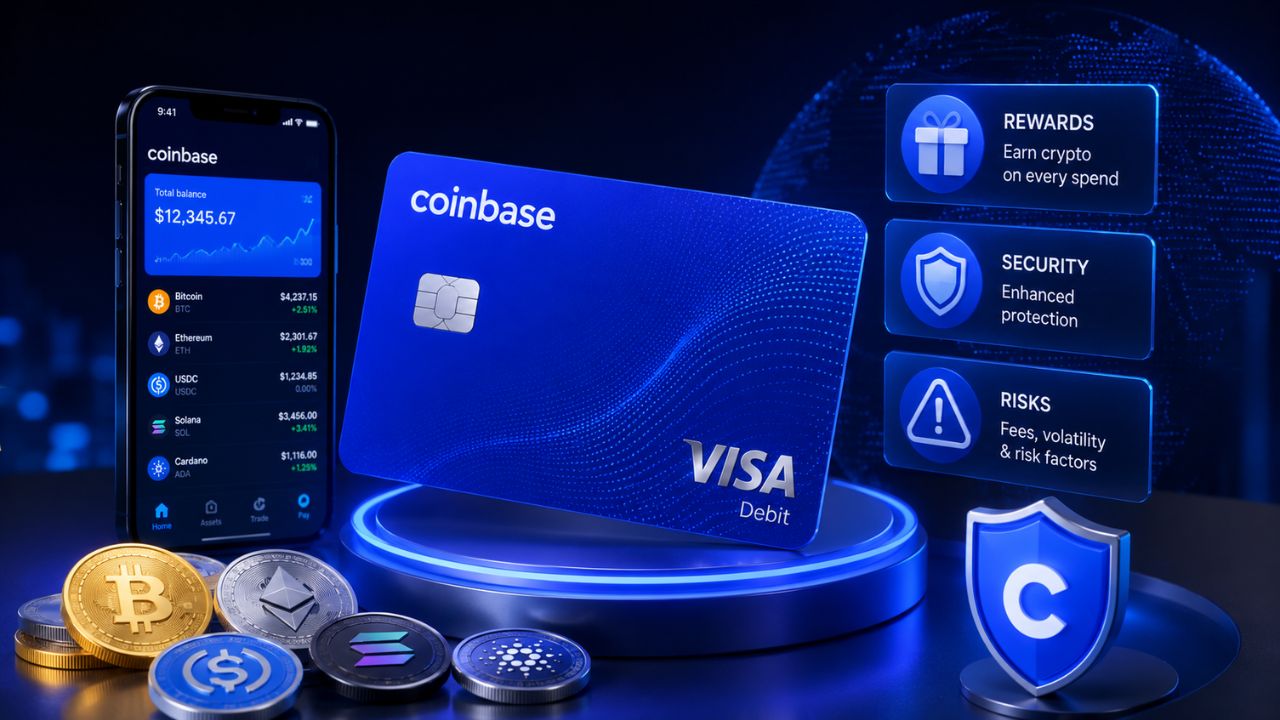
What Is the Coinbase Visa Card?
The Coinbase Visa Card usually refers to the Coinbase Card, a Visa prepaid debit card connected to a Coinbase account. It allows eligible U.S. residents to spend available funds through the Visa debit network, including U.S. dollars, USDC, or supported crypto assets.
Coinbase describes the card as a prepaid debit card rather than a traditional credit card. That distinction matters. With a debit-style product, you are generally spending available funds, not borrowing money through a revolving credit line.
The card is issued by Pathward, N.A., Member FDIC, pursuant to a license from Visa U.S.A. Inc., and is powered by Marqeta. Coinbase says U.S. residents, excluding Hawaii, can use the card wherever Visa debit cards are accepted, and that there is no application fee or credit check during the application process.
In simple terms, the card gives Coinbase users a way to:
- Spend cash or crypto from Coinbase
- Use a virtual or physical card
- Earn variable crypto rewards where available
- Manage card settings from the Coinbase app
- Lock or manage the card for security
The biggest appeal is convenience. Instead of manually selling crypto, transferring money to a bank, and then spending it, the card can handle spending from selected balances. Coinbase notes that cryptocurrency is automatically converted to U.S. dollars for purchases and ATM withdrawals.
Coinbase Card vs. Coinbase One Card: Do Not Confuse Them
One common source of confusion is the difference between the Coinbase Card and the newer Coinbase One Card.
The Coinbase Card is the Visa prepaid debit card most people mean when they search for the Coinbase Visa Card. Coinbase’s own help page distinguishes the Coinbase Card debit card from the Coinbase One credit card.
The Coinbase One Card is a different product. It is a credit card offered through Coinbase and Cardless, issued by First Electronic Bank, and connected to the American Express network. Coinbase says it is available only to Coinbase One members in the U.S., excluding U.S. territories, and is subject to credit approval and other eligibility requirements.
Here is the practical difference:
| Feature | Coinbase Card | Coinbase One Card |
|---|---|---|
| Card type | Prepaid debit card | Credit card |
| Network | Visa debit | American Express network |
| Credit check | Coinbase says no credit check for the debit card application | Coinbase says subject to credit approval |
| Spending source | Coinbase cash, USDC, or supported crypto | Credit line, subject to card terms |
| Rewards | Variable crypto rewards, check app | Bitcoin back tiers tied to Assets on Coinbase |
| Best for | Spending available Coinbase balances | Coinbase One members who want a crypto rewards credit card |
This article focuses mainly on the Coinbase Visa Card, meaning the Coinbase debit card. However, the Coinbase One Card is worth knowing about because some Coinbase card searches now surface both products.
How the Coinbase Visa Card Works
The card works by connecting your Coinbase account balance to card spending. When you make a purchase, Coinbase uses the payment source you selected. If that source is crypto, Coinbase converts the amount needed into U.S. dollars for the transaction.
For example, imagine you set USDC as your spending asset and buy $45 of groceries. The transaction is processed as a normal Visa debit purchase. Your Coinbase balance is reduced by the purchase amount, and if you are eligible for rewards, Coinbase may credit the selected crypto reward later.
If you set Bitcoin or another supported crypto asset as the spending source, the experience may feel similar at checkout, but the tax and market implications are different. Spending crypto is generally treated like selling that asset before paying the merchant.
The IRS says income from digital assets can be taxable and that taxpayers may have to report digital asset transactions. IRS guidance also states that exchanging virtual currency held as a capital asset for goods or other property can produce a capital gain or loss.
That is why many users prefer spending U.S. dollars or USDC instead of volatile crypto. Coinbase says that, as long as USDC trades at par with USD, using the card with USDC should not result in a taxable gain or loss, but it also recommends consulting a tax advisor for your specific situation.
Main Features of the Coinbase Visa Card
The Coinbase Visa Card is designed for people who already use Coinbase and want an easier way to connect crypto balances to everyday spending. Its value depends on how you use it.
Spend Cash, USDC, or Supported Crypto
Coinbase says card users can spend local currency, USDC, or supported crypto without Coinbase transaction fees, though spreads can apply when crypto is bought, sold, or traded.
This flexibility is useful, but it can also create decision fatigue. A beginner may wonder whether to spend cash, USDC, Bitcoin, Ethereum, or another asset.
A practical rule is simple: avoid spending long-term crypto holdings unless you are comfortable selling that asset. For everyday budgeting, USD or USDC may be easier to track.
Crypto Rewards
The card can offer crypto rewards on eligible purchases for U.S. users. Coinbase says rewards are optional, available to U.S. card users, variable, and should be checked in the app for the most updated rate.
Rewards are appealing because they can help you accumulate crypto without making direct purchases. But rewards are not the same as guaranteed value. If you earn $10 worth of crypto rewards and the asset later falls, your reward value falls too. If it rises, your reward may become more valuable.
That upside-and-downside tradeoff is central to crypto rewards.
No Coinbase Transaction Fee for Card Spending
Coinbase’s pricing disclosure says spending with the Coinbase Card has no transaction fees. It also says Coinbase includes a spread in the price to buy or sell cryptocurrencies and that ATM operators may charge fees.
This is an important distinction. “No transaction fee” does not always mean “no cost in every situation.” If crypto must be converted, the spread can affect your effective cost. If you use an ATM, the ATM owner may charge a separate fee.
Virtual and Physical Card Options
Coinbase says users can create a virtual card or order a physical card. A virtual card can be useful for online purchases, subscriptions, and mobile wallet use, while a physical card is helpful for in-store purchases and backup access.
In-App Card Management
The Coinbase app is where users typically manage card settings, select rewards, update funding preferences, view activity, and handle security features. Coinbase lists security features such as two-factor authentication, card freezing, PIN changes, and more.
No Staking Requirement for Eligibility
Coinbase says there is no requirement to stake assets to become eligible for the debit card. It also states that there is no credit check or application fee for the Coinbase Card debit card application process.
That makes the product more accessible than some crypto cards that require staking, token lockups, or high account balances.
Coinbase Visa Card Fees and Costs to Understand
A card can advertise simple fees and still have costs that matter in real life. With the Coinbase Visa Card, the main areas to understand are card spending fees, crypto conversion spreads, ATM fees, and taxes.
Spending Fees
Coinbase says spending with the Coinbase Card has no transaction fees.
That is helpful for everyday purchases. If you spend USD or USDC, the transaction may be straightforward. If you spend another crypto asset, the conversion process matters more.
Crypto Spread
Coinbase says it includes a spread in the price to buy or sell cryptocurrencies. A spread is the difference between the quoted price and the market reference price Coinbase uses for execution.
A spread is not always shown to consumers the same way as a flat fee, but it can still affect the total value you receive. Coinbase says users see a preview with the total amount paid, including spread and fees, for trades.
When using a crypto card, spreads matter most if you regularly spend volatile assets. Small differences can add up over hundreds of purchases.
ATM Fees
Coinbase says you can withdraw cash from ATMs using the Coinbase Card with no fee from Coinbase, but the ATM operator may charge a fee.
That means ATM withdrawals should be occasional, not your primary use case. A regular bank debit card may be better if you frequently need cash.
Tax Costs and Recordkeeping
Taxes are not exactly a card fee, but they can become the most overlooked cost.
If you spend crypto that has increased in value, you may have a taxable gain. If it has decreased, you may have a loss. The IRS says taxpayers must report income, gain, or loss from taxable virtual currency transactions, and exchanging virtual currency for goods can trigger gain or loss calculations.
This is why spending Bitcoin on coffee may be more complicated than it sounds. The transaction is small, but the recordkeeping still matters.
Opportunity Cost
There is also an opportunity cost. Spending crypto means you no longer hold that asset. If the price later rises, you miss that upside. If it later falls, spending it may have been beneficial. No one knows in advance.
For most people, the card works best when used as a controlled spending tool, not as a way to casually drain long-term crypto holdings.
Benefits of Using the Coinbase Visa Card
The card’s strongest benefits come from convenience, rewards, and Coinbase ecosystem integration.
It Makes Crypto Easier to Use
For many people, crypto sits in an exchange account and rarely gets used. The Coinbase Visa Card turns some of that balance into a payment option.
This can be useful if you:
- Receive USDC or crypto payments
- Keep cash in Coinbase
- Want to spend from a crypto platform without manual transfers
- Prefer managing crypto and card activity in one app
It Can Help You Earn Crypto Passively
Crypto rewards can be attractive for people who want exposure to digital assets without making repeated purchases. Instead of buying $20 of crypto each month, you may earn rewards from normal spending.
That said, reward rates are variable. Coinbase tells debit card users to check the app for the latest rate.
No Credit Check for the Debit Card
Because the Coinbase Card is a debit-style product, Coinbase says there is no credit check during the debit card application process.
That may appeal to users who do not want a hard credit inquiry or who prefer not to open another credit card.
Useful for USDC Spending
USDC can be a practical funding source because it is designed to track the U.S. dollar. While stablecoins still carry risks, using USDC may be simpler than spending volatile crypto assets.
Coinbase specifically notes that if USDC trades at par with USD, using the card with USDC should not result in a taxable gain or loss.
App-Based Controls Add Convenience
Card freezing, PIN management, transaction monitoring, and two-factor authentication are useful for day-to-day card management. Coinbase highlights these security features on its card page.
Drawbacks and Limitations
The Coinbase Card is useful, but it is not ideal for everyone.
Crypto Spending Can Create Tax Complexity
This is the biggest drawback for U.S. users. Spending crypto is not like spending dollars from a checking account. It may be treated as a taxable disposal.
If you make hundreds of small purchases using Bitcoin or Ethereum, you may create hundreds of taxable events to track. That can turn a convenient card into a recordkeeping headache.
Rewards Are Variable
The reward rate can change, and the value of rewards can move with the market. A 2% crypto reward at the time of purchase is not guaranteed to stay worth 2% in dollar terms.
Spreads Can Reduce Value
Even without a Coinbase transaction fee for spending, crypto conversion spreads can affect the economics. Users who spend crypto frequently should review transaction details carefully.
It Keeps You Inside the Coinbase Ecosystem
This is convenient if you already trust Coinbase, but it also increases platform dependence. If your Coinbase account is restricted, under review, compromised, or unavailable, your card access may be affected.
Crypto Is Not FDIC-Insured
Coinbase states that cryptocurrency is not legal tender, is not backed by the government, and is not insured or guaranteed by FDIC, NCUSIF, or SIPC protections. Coinbase also says its crime insurance does not cover losses from unauthorized access to your personal Coinbase account due to credential loss or breach.
Coinbase says U.S. customer cash may be held in ways that can allow pass-through FDIC or NCUSIF insurance when funds are held as cash at partner institutions, but that protection is different from insurance on cryptocurrency itself.
Who the Coinbase Visa Card Is Best For
The Coinbase Visa Card may be a good fit for users who already understand Coinbase and want a simple way to connect spending with crypto rewards.
It may suit you if:
- You already use Coinbase regularly
- You want to earn crypto rewards from everyday purchases
- You prefer a debit card over a credit card
- You are comfortable using the Coinbase app
- You plan to spend USD or USDC more often than volatile crypto
- You understand that crypto rewards can rise or fall in value
- You are willing to keep tax records when spending crypto
For example, a user who keeps a small USDC balance in Coinbase and uses the card for streaming subscriptions or groceries may find the card convenient. The same user can avoid selling long-term Bitcoin holdings for everyday purchases.
Who Should Avoid It
The card may not be the best choice for everyone.
You may want to avoid it if:
- You do not understand crypto taxes
- You dislike variable reward values
- You want simple cash back in dollars
- You frequently withdraw cash from ATMs
- You are uncomfortable keeping funds on a crypto exchange
- You need a traditional bank account replacement
- You want credit-building benefits
- You do not want another app-based financial tool
A normal cash-back credit card may be simpler for many people. Traditional credit cards can offer fraud protections, predictable rewards, statement credits, travel benefits, and credit-building opportunities. The Coinbase Card is better viewed as a crypto spending tool, not a full replacement for mainstream banking or credit products.
How to Apply for the Coinbase Visa Card
The exact application flow can change, but the process generally happens through Coinbase.
Step 1: Create or Sign In to Coinbase
You need a Coinbase account before applying. Make sure your account information is accurate, especially your legal name, address, date of birth, and tax-related details.
Step 2: Complete Identity Verification
Coinbase says financial institutions and their third parties must obtain, verify, and record identifying information under USA PATRIOT Act requirements when opening a card account. This can include your name, address, date of birth, and other identifying information, and Coinbase may ask for a driver’s license or other documents.
Step 3: Check Eligibility
Coinbase says the debit card is available to U.S. residents excluding Hawaii. Eligibility and availability can change, so users should check directly in the Coinbase app.
Step 4: Choose Your Funding Source
Once approved, choose what balance you want to spend from. For many beginners, USD or USDC is easier than spending volatile crypto.
Step 5: Select Rewards
If rewards are available in your account, choose the crypto reward option that fits your goals. Coinbase says users can select from rotating crypto rewards and switch rewards.
Step 6: Use the Virtual or Physical Card
A virtual card may be available for online use, while a physical card can be ordered for in-person spending.
Step 7: Monitor Transactions
Review purchases, rewards, conversions, and funding balances regularly. This is especially important if you are spending crypto because you may need records later.
Practical Examples of How People Might Use the Card
The card can be used in several ways, but some are more practical than others.
Example 1: The USDC Everyday Spender
Maria keeps $500 in USDC on Coinbase. She uses the card for groceries, gas, and streaming subscriptions. Her goal is not to sell Bitcoin or Ethereum. She simply wants a crypto-connected debit card and occasional rewards.
This is one of the cleaner use cases because USDC is designed to track the dollar, though stablecoin and platform risks still apply.
Example 2: The Crypto Rewards Accumulator
James uses the card for everyday purchases because he wants rewards in crypto. He treats the rewards as a long-term speculative asset and does not rely on them for monthly budgeting.
This works best when the user accepts volatility. If rewards lose value, it should not affect essential finances.
Example 3: The Bitcoin Holder Who Should Be Careful
Ava has held Bitcoin for several years. She considers using the card to spend Bitcoin directly. This may be convenient, but every purchase could effectively sell a small amount of Bitcoin and create tax records.
For Ava, using USD or USDC may be simpler unless she intentionally wants to sell Bitcoin.
Example 4: The Frequent ATM User
Chris wants a card mainly for cash withdrawals. The Coinbase Card may work at ATMs, but ATM operators can charge fees. A traditional checking account with broad ATM access may be more practical.
Coinbase Visa Card vs. Traditional Cash-Back Cards
The Coinbase Visa Card competes less with normal debit cards and more with rewards cards in the user’s mind. The key question is whether you want crypto exposure or predictable cash value.
| Category | Coinbase Visa Card | Traditional Cash-Back Card |
|---|---|---|
| Reward type | Crypto, variable | Cash, points, or miles |
| Reward value | Can rise or fall | Usually more predictable |
| Credit building | No, for debit card | Often yes if credit card |
| Tax complexity | Higher if spending crypto | Usually lower for normal cash back |
| Best use | Coinbase users and crypto rewards seekers | Everyday consumers wanting simplicity |
| Main risk | Crypto volatility, tax records, platform dependence | Interest, fees, overspending if credit |
If your goal is maximum simplicity, a cash-back card may be better. If your goal is crypto accumulation from daily spending, the Coinbase Card may be more interesting.
Coinbase Visa Card vs. Other Crypto Cards
Crypto cards vary widely. Some require staking, some use prepaid balances, some offer rotating rewards, and some are tied to specific exchanges.
When comparing the Coinbase Card with other crypto debit card options, look at:
- Availability in your state
- Supported assets
- Reward rate and reward asset choices
- Whether staking is required
- Spending limits
- ATM rules
- Foreign transaction terms
- Crypto conversion costs
- Tax reporting tools
- Account security features
- Customer support reputation
- Whether the issuer is a bank partner
The Coinbase Card’s advantage is its connection to a major U.S. crypto platform and Visa debit acceptance. Its disadvantage is that it may not always offer the highest rewards, and users are still dealing with crypto volatility, tax complexity, and exchange custody risk.
Safety and Security Considerations
Any card connected to a crypto account deserves extra caution. A compromised crypto account can be more stressful than a compromised card because digital assets may be difficult to recover.
Use these security habits:
- Enable strong two-factor authentication
- Avoid SMS authentication if stronger options are available
- Use a unique password for Coinbase
- Keep your email account secure
- Freeze the card if it is missing
- Watch for phishing messages
- Do not share support codes or seed phrases
- Keep only the spending amount you need available
- Review account activity often
Coinbase states that its crime insurance covers a portion of digital assets held across storage systems against theft, including cybersecurity breaches, but it does not cover losses from unauthorized access to your personal account due to credential loss or breach.
That means personal security matters.
Tax Considerations for U.S. Users
This article is for general educational purposes and is not tax, legal, or financial advice. Crypto tax rules can be complex, and your situation may depend on your cost basis, holding period, state taxes, account activity, and reporting obligations.
The most important idea is this: spending crypto can be treated like selling crypto.
If you bought Bitcoin at $30,000 and spend some when Bitcoin is worth $60,000, you may have a gain on the portion sold. If you spend crypto when it is worth less than your cost basis, you may have a loss.
The IRS says taxpayers must report income, gain, or loss from all taxable transactions involving virtual currency, and exchanging virtual currency for goods can create a gain or loss.
To make life easier:
- Prefer USD or USDC for routine spending if you want simpler records
- Download Coinbase transaction history periodically
- Track rewards received
- Keep records of crypto conversion transactions
- Save year-end tax forms
- Consider crypto tax software
- Ask a qualified tax professional if you have frequent activity
Do not assume small transactions are automatically irrelevant. Recordkeeping is part of responsible crypto use.
Mistakes to Avoid
Spending Long-Term Holdings Without Thinking
Do not treat Bitcoin, Ethereum, or other long-term holdings like a checking account unless that is truly your plan. Spending crypto means giving up future upside and possibly creating taxable events.
Ignoring the Spread
A no-transaction-fee card can still involve a spread when crypto is converted. Review transaction details and understand the real cost of spending crypto.
Chasing Rewards Without a Budget
Crypto rewards are not a reason to overspend. A reward is valuable only if the purchase itself fits your budget.
Using the Card for Too Many Tiny Crypto Transactions
If you spend volatile crypto for every coffee, snack, and parking meter, your tax records can become messy. Use a simpler funding source when possible.
Treating Crypto Rewards Like Guaranteed Savings
Crypto rewards can lose value. They should be viewed as speculative rewards, not guaranteed savings.
Keeping Too Much Crypto in a Spending Account
A spending card should not expose your entire crypto portfolio. Consider separating long-term holdings from everyday spending balances.
Decision Checklist Before You Use the Card
Before making the Coinbase Visa Card your everyday spending card, ask yourself:
- Am I eligible in my state?
- Do I understand that this is a debit/prepaid-style card, not a traditional credit card?
- Will I mostly spend USD, USDC, or volatile crypto?
- Do I understand crypto tax reporting?
- Am I comfortable with variable rewards?
- Have I reviewed current reward rates in the Coinbase app?
- Do I understand Coinbase’s spread and ATM fee disclosures?
- Do I have strong account security enabled?
- Am I comfortable keeping funds on Coinbase?
- Would a normal cash-back card be simpler for my needs?
If most of your answers are clear, the card may be worth considering. If several answers feel uncertain, slow down before using it heavily.
Best Practices for Getting the Most Value
Use the card intentionally rather than casually.
For many users, the best setup is:
- Keep long-term crypto holdings separate.
- Fund spending with USD or USDC.
- Use the card for planned purchases only.
- Choose rewards you are comfortable holding.
- Review monthly transaction history.
- Export records before tax season.
- Recheck fees, reward rates, and eligibility terms regularly.
This approach keeps the benefits while reducing unnecessary complexity.
Alternatives to the Coinbase Visa Card
The Coinbase Card is not the only way to connect crypto and everyday spending.
Traditional Cash-Back Credit Cards
Best for users who want predictable rewards, stronger budgeting tools, and possible credit-building benefits. These cards may be simpler for most households.
Bank Debit Cards
Best for users who want direct access to checking funds, ATM networks, and fewer crypto-related tax concerns.
Other Crypto Debit Cards
Best for users comparing reward rates, supported assets, regional availability, and staking requirements. Read the terms carefully because crypto card programs can change quickly.
Manual Crypto-to-Cash Transfers
Best for users who occasionally sell crypto and transfer dollars to a bank. This is less convenient but may create cleaner spending habits.
Coinbase One Card
Best for Coinbase One members who want a crypto rewards credit card and are comfortable with credit approval, membership requirements, and American Express network acceptance. Coinbase says its Coinbase One Card rewards range from 2% to 4% bitcoin back depending on Assets on Coinbase, with higher-tier rewards capped on the first $10,000 in eligible purchases per calendar month before reverting to 2% for additional eligible purchases.
Is the Coinbase Visa Card Worth It?
The Coinbase Visa Card can be worth it for the right user, especially someone who already uses Coinbase, wants crypto rewards, and plans to spend USD or USDC rather than constantly selling volatile assets.
It is less compelling for someone who wants the simplest possible rewards card. Traditional cash-back cards are often easier to understand, easier to track, and less exposed to crypto volatility.
The card’s real value depends on your behavior. If you use it for planned purchases, avoid unnecessary crypto conversions, track taxes, and keep your account secure, it can be a useful tool. If you use it impulsively, ignore tax records, or chase rewards, it can become more complicated than expected.
FAQ
Is the Coinbase Visa Card a credit card?
No. The Coinbase Card commonly referred to as the Coinbase Visa Card is a prepaid debit card. Coinbase separately offers the Coinbase One Card, which is a credit card connected to the American Express network and subject to credit approval.
Does the Coinbase Card have a credit check?
Coinbase says there is no credit check during the Coinbase Card debit card application process. Eligibility requirements can still apply, and Coinbase must verify identity information.
Can I earn crypto rewards with the card?
Yes, eligible U.S. card users may earn crypto rewards, but rewards are optional, variable, and subject to Coinbase’s current program terms. Check the Coinbase app for the latest available rate.
Are there fees for using the Coinbase Card?
Coinbase says card spending has no Coinbase transaction fees. However, spreads can apply when crypto is bought, sold, or traded, and ATM operators may charge their own fees.
Is spending crypto with the card taxable?
It can be. In the U.S., spending crypto may be treated as selling that asset, which can create a gain or loss. Consider using USD or USDC for routine purchases and consult a tax professional if needed.
Is the Coinbase Card available in every U.S. state?
Coinbase says the debit card is available to U.S. residents excluding Hawaii. Availability can change, so check your Coinbase account for current eligibility.
Is crypto on Coinbase FDIC-insured?
No. Coinbase states that cryptocurrency is not insured or guaranteed by FDIC, NCUSIF, or SIPC protections and may lose value. U.S. dollar cash balances may have different pass-through insurance treatment when held as cash at partner institutions.
What is the best way to use the card?
For many beginners, the cleanest approach is to fund spending with USD or USDC, use the card for planned purchases, keep long-term crypto separate, and track all transactions for tax season.
Conclusion
The Coinbase Visa Card is best understood as a bridge between Coinbase balances and everyday spending. It can make crypto rewards more accessible, simplify USDC spending, and give Coinbase users a familiar debit card experience.
But the card is not a magic upgrade over regular cash back. Crypto rewards can change in value, crypto spending can create tax obligations, and account security matters. The smartest users will treat it as a practical spending tool, not as a reason to overspend or casually sell long-term holdings.
If you already use Coinbase, understand the risks, and want a crypto-connected debit card, it may be worth exploring. If you want predictable rewards with minimal recordkeeping, a traditional cash-back card may still be the better everyday choice.