
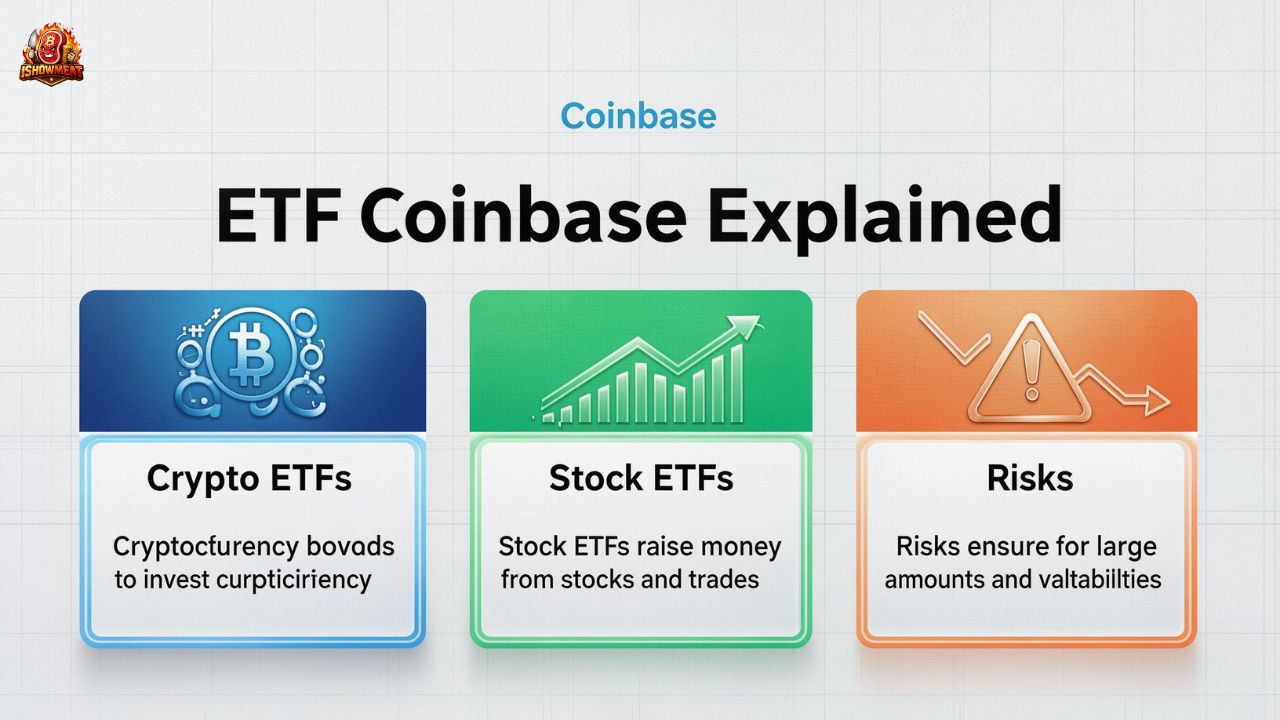
Introduction
Crypto used to feel separate from traditional investing, but that wall is getting thinner every year. That is why many investors now search for etf coinbase when they want to understand how Coinbase connects with ETFs, Bitcoin funds, Ethereum funds, and ordinary stock market investing.
The phrase can mean a few different things. Some people want to know whether they can buy ETFs on Coinbase. Others want to understand Coinbase’s role as a custodian behind major spot Bitcoin ETFs and spot Ethereum ETFs. Some are simply trying to compare buying crypto directly with buying a regulated fund through a brokerage account.
This topic matters because ETFs have become one of the easiest ways for everyday investors to access different markets. Coinbase says its Coinbase Capital Markets platform provides access to U.S. stocks and ETFs for eligible U.S. users, while Coinbase Institutional has also said it serves as custodian for 9 of 11 spot Bitcoin ETFs and 8 of 9 ETH ETFs.
So if you are wondering what etf coinbase really means, this guide breaks it down in plain English: what Coinbase offers, how crypto ETFs work, where Coinbase fits into the ETF ecosystem, and what risks investors should understand before putting money into any fund.
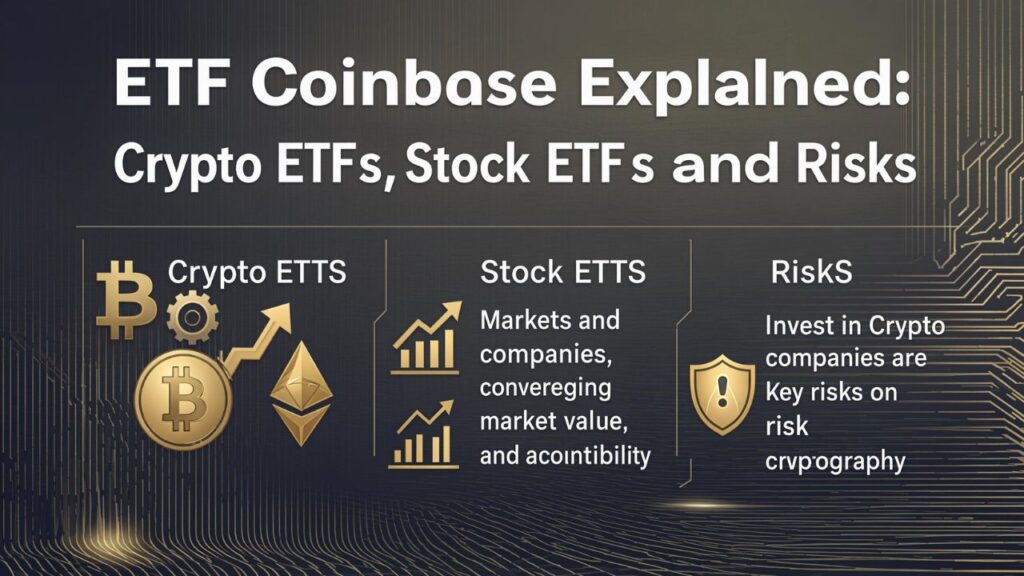
What Does etf coinbase Mean?
etf coinbase is a search phrase people use when looking for the connection between Coinbase and exchange-traded funds. It may refer to ETF trading through Coinbase, Coinbase’s custody role in crypto ETFs, or Coinbase-related exposure inside certain funds.
An ETF, or exchange-traded fund, is an investment fund that trades on a stock exchange like a regular stock. Coinbase’s own education page describes ETFs as similar in many ways to mutual funds and notes that they generally track an asset, like gold, or a basket of assets.
Simple Definition of an ETF
An ETF is a fund that holds one or more assets and allows investors to buy shares of that fund through a brokerage account.
Instead of buying every asset individually, an investor can buy one ETF that provides exposure to a market, sector, index, commodity, bond strategy, or crypto asset.
Common ETF types include:
- Stock ETFs
- Bond ETFs
- Index ETFs
- Sector ETFs
- Commodity ETFs
- Bitcoin ETFs
- Ethereum ETFs
- Thematic ETFs
- International ETFs
Why Coinbase Is Part of the ETF Conversation
Coinbase is part of the ETF conversation for two main reasons.
First, Coinbase now supports access to U.S. stocks and ETFs through Coinbase Capital Markets for eligible U.S. residents. Coinbase says this stock and ETF trading experience supports one-time and limit orders and is separate from its crypto services.
Second, Coinbase is deeply involved in the crypto ETF market as an institutional custodian. Coinbase has stated that it powers custody for many U.S. spot Bitcoin and ETH ETFs, helping asset managers securely hold the underlying crypto.
Can You Buy ETFs on Coinbase?
Yes, eligible U.S. users can buy and sell U.S. ETFs on Coinbase through Coinbase Capital Markets. Coinbase says stock trading is available to U.S. users and includes access to stocks and ETFs in the same place as crypto.
That makes etf coinbase a practical topic for investors who want a single app experience where they can view or trade both traditional assets and digital assets.
What Coinbase Capital Markets Offers
Coinbase Capital Markets provides access to U.S. stocks and ETFs. This means users can search for eligible ETF tickers, place trades, and manage those securities through the Coinbase investing experience.
Coinbase’s resource guide for stocks and funds includes onboarding, trading stocks and ETFs, market hours, settlement, pricing, order types, statements, and transfers.
Who Can Use Coinbase ETF Trading?
Coinbase’s stock and ETF trading is aimed at U.S. users who are eligible to open a Coinbase Capital Markets brokerage account. A regular Coinbase crypto account is not the same thing as a brokerage account.
Users may need to complete:
- Identity verification
- Brokerage onboarding
- Regulatory questions
- Tax information
- Account agreements
- Funding steps
Is ETF Trading on Coinbase the Same as Crypto Trading?
No. ETF trading and crypto trading are different.
When you buy crypto, you may be buying a digital asset such as Bitcoin, Ethereum, Solana, or USDC. When you buy an ETF, you are buying a regulated security that trades through a brokerage account.
That difference affects:
- Trading hours
- Settlement
- Fees
- Tax reporting
- Regulatory protections
- Order routing
- Account statements
- Investor disclosures
Coinbase’s own support material separates stocks and funds from crypto services, which is important for users who are new to traditional securities.
How Coinbase Connects to Crypto ETFs
The second meaning of etf coinbase is Coinbase’s behind-the-scenes role in crypto ETFs.
When an asset manager launches a spot Bitcoin ETF or spot Ethereum ETF, the fund needs secure custody for the underlying digital assets. That is where companies like Coinbase Custody can come in.
Coinbase as a Crypto Custodian
A custodian is a company that safely holds assets for another institution. In traditional finance, custodians may hold stocks, bonds, or cash. In crypto, custodians hold private keys and digital assets using institutional security systems.
Coinbase said in 2025 that Coinbase Institutional served as custodian for 9 of 11 spot Bitcoin ETFs and 8 of 9 ETH ETFs.
That is a major role because custody is one of the most sensitive parts of a crypto ETF. If the underlying Bitcoin or Ethereum is not held securely, the entire fund structure could face serious risk.
Why Custody Matters
Crypto custody is not like storing a paper stock certificate in a vault. It involves private keys, cold storage, access controls, signing procedures, security audits, operational controls, insurance considerations, and compliance systems.
Coinbase has described its institutional custody solution as part of why major ETF issuers selected it for Bitcoin ETF mandates.
Coinbase and Spot Bitcoin ETFs
Spot Bitcoin ETFs hold Bitcoin directly, or through a structure designed to track the spot price of Bitcoin. These products became a major milestone in U.S. markets after the SEC approved spot Bitcoin ETFs in January 2024. Chainalysis described the January 10, 2024 approval as a milestone that helped create a bridge between traditional finance and crypto.
Coinbase’s role in these funds is not usually to manage the ETF portfolio. Instead, it often acts as a custodian, prime broker, or infrastructure provider depending on the fund’s structure and agreements.
Why Investors Search for etf coinbase
Investors search etf coinbase because they are usually trying to answer one of three questions.
First, “Can I buy ETFs on Coinbase?” Second, “Is Coinbase involved in Bitcoin ETFs?” Third, “Should I buy crypto directly or through an ETF?”
Each question leads to a different answer.
[Image: Infographic showing three paths: buy ETF on Coinbase, buy crypto directly, or invest in crypto ETF through brokerage]
Investors Want Simpler Access
Buying crypto directly requires understanding wallets, private keys, networks, transaction fees, and exchange security. Buying an ETF may feel more familiar to investors who already use brokerage accounts or retirement-style investing tools.
ETFs can simplify access because investors buy fund shares instead of managing crypto wallets themselves.
Investors Want Regulated Products
Many investors prefer regulated securities over direct digital asset custody. A spot Bitcoin ETF or Ethereum ETF may offer exposure to crypto prices through familiar brokerage infrastructure.
This does not remove market risk. Bitcoin and Ethereum can still be volatile, and ETF shares can fall sharply if the underlying asset declines.
Investors Want One Platform
Coinbase is trying to bring more asset types into one investing experience. For users who already manage crypto on Coinbase, adding stocks and ETFs may feel convenient.
However, convenience should not replace understanding. A stock ETF, Bitcoin ETF, and direct Bitcoin purchase are not the same thing.
ETF Coinbase: Direct Crypto vs Crypto ETFs
The biggest decision for many investors is whether to buy crypto directly on Coinbase or buy a crypto ETF through a brokerage account.
Both approaches can make sense, depending on the investor’s goals.
Buying Crypto Directly
Buying crypto directly means you own the digital asset itself, such as BTC or ETH. You can potentially withdraw it to a self-custody wallet, use it on-chain, transfer it, stake it where supported, or interact with Web3 applications.
Direct crypto ownership may fit users who want:
- Self-custody
- On-chain access
- Wallet control
- DeFi participation
- Crypto payments
- Staking options
- Direct asset ownership
Buying a Crypto ETF
Buying a crypto ETF means you own shares of a fund that tracks crypto exposure. You do not directly control the underlying Bitcoin or Ethereum.
A crypto ETF may fit investors who want:
- Brokerage account access
- Traditional statements
- No wallet management
- Simpler tax documents
- Institutional custody
- Retirement account compatibility where available
- Regulated securities exposure
Main Difference
The core difference is control.
With direct crypto, you may control the asset itself. With a crypto ETF, you control fund shares, not the underlying coins.
That can be good or bad depending on what you want. If you only want price exposure, an ETF may be convenient. If you want to use crypto networks directly, an ETF will not give you that ability.
Types of ETFs You May Find on Coinbase
Coinbase’s ETF availability can change, and users should always search the platform directly for supported tickers. In general, ETFs on a brokerage platform may include several categories.
Broad Market ETFs
Broad market ETFs track large indexes or diversified baskets of stocks. These may include funds tied to the S&P 500, total U.S. stock market, Nasdaq-style indexes, or global equity markets.
These ETFs are popular with long-term investors because they spread exposure across many companies.
Sector ETFs
Sector ETFs focus on a specific part of the economy, such as technology, energy, healthcare, financials, real estate, or consumer goods.
They can be useful for targeted exposure but may carry more concentration risk than broad market funds.
Bond ETFs
Bond ETFs hold debt securities such as government bonds, corporate bonds, municipal bonds, or short-term Treasury instruments.
They may appeal to investors seeking income, lower volatility, or diversification, although bond ETFs still carry interest rate and credit risk.
Crypto-Related ETFs
Crypto-related ETFs may include spot crypto ETFs, futures-based crypto ETFs, blockchain equity ETFs, or funds that hold companies involved in digital asset infrastructure.
Not all crypto-related ETFs are the same. A spot Bitcoin ETF is different from a blockchain stock ETF, and both are different from directly owning Bitcoin.
Coinbase Stock, ETFs, and Crypto Exposure
Some investors search etf coinbase because they want exposure to Coinbase as a public company, not just Coinbase as a platform.
Coinbase Global, Inc. trades publicly under the ticker COIN. Some ETFs may hold COIN as part of a broader basket, especially funds focused on fintech, innovation, crypto equities, blockchain technology, or U.S. growth stocks.
Buying COIN vs Buying an ETF That Holds COIN
Buying COIN stock means investing directly in Coinbase Global, Inc. Your performance depends heavily on Coinbase’s business, revenue, expenses, regulation, trading volume, custody growth, subscriptions, institutional services, and market sentiment.
Buying an ETF that holds COIN gives indirect exposure. You may also own many other companies in the same fund.
Why Some Investors Prefer ETF Exposure
An ETF can reduce single-company risk. If Coinbase stock performs poorly, other holdings in the ETF may help offset the damage, depending on the fund’s structure.
However, an ETF can still lose money. Diversification reduces some risks but does not eliminate market risk.
Fees to Understand Before Buying ETFs
ETF investing can look simple, but fees matter.
Expense Ratio
The expense ratio is the annual fee charged by the ETF provider. It is usually expressed as a percentage of assets.
For example, an ETF with a 0.20% expense ratio costs about $2 per year for every $1,000 invested, before considering trading spreads or other costs.
Trading Spread
The bid-ask spread is the difference between what buyers are willing to pay and what sellers are asking. Popular ETFs often have tight spreads, while smaller or less liquid ETFs may have wider spreads.
Brokerage Fees
Coinbase says its stock trading offers zero commission, but investors should still read pricing details and account terms carefully because other costs, spreads, regulatory fees, or future changes may apply.
Crypto ETF Fees
Crypto ETFs may charge higher expense ratios than broad index ETFs. Investors should compare fund fees, custody arrangements, tracking quality, liquidity, and tax treatment before choosing a fund.
Benefits of Using Coinbase for ETF Access
Using Coinbase for ETFs may appeal to investors who already use the platform.
Familiar Interface
Coinbase is known for a simple app experience. Users who already buy crypto there may find it easier to explore stocks and ETFs without opening another investing app.
Combined Asset View
A combined experience can help users see crypto, stocks, and ETFs in one place. That may make portfolio tracking easier.
Fractional Investing
Coinbase says stock trading supports fractional share trading for eligible assets, which can make investing more accessible for users with smaller dollar amounts. (Coinbase)
24/5 Trading Availability
Coinbase says U.S. users can trade stocks and ETFs 24/5 in the same place as their crypto. (Coinbase)
That may be useful for people who want more flexible access than standard market hours, although extended or overnight trading can involve lower liquidity and wider spreads.
Risks of Using Coinbase for ETFs
A convenient platform can still carry investment risk.
Market Risk
ETFs can fall in value. A stock ETF may decline during a market correction. A bond ETF may fall when interest rates rise. A crypto ETF may drop sharply if Bitcoin or Ethereum falls.
Platform Availability
Not every ETF may be available on Coinbase. Supported securities can change over time, and availability may depend on eligibility, jurisdiction, platform rules, and market conditions.
Product Confusion
A user may confuse:
- Coinbase stock
- Coinbase ETF access
- Crypto ETFs
- Direct crypto
- Blockchain equity ETFs
- Tokenized assets
These are different products with different risks.
Custody Concentration Risk
Coinbase’s major role in crypto ETF custody is a sign of institutional trust, but it also raises questions about concentration. Some filings and market observers have noted that Coinbase’s large custody role makes it a critical provider in the U.S. crypto ETF ecosystem. (SEC)
That does not mean investors should avoid crypto ETFs. It means they should understand the infrastructure behind the fund.
How to Choose an ETF on Coinbase
Choosing an ETF should begin with your investment goal, not the ticker symbol.
Define Your Goal
Ask what you want the ETF to do.
Are you trying to build long-term wealth? Track Bitcoin? Reduce portfolio volatility? Add income? Gain exposure to technology? Diversify beyond crypto?
The answer will narrow your options.
Read the Fund Page
Before buying, review:
- Fund objective
- Holdings
- Expense ratio
- Assets under management
- Trading volume
- Bid-ask spread
- Issuer
- Index methodology
- Risk disclosures
- Distribution history
Compare Similar Funds
Two ETFs may appear similar but behave differently. Compare expense ratios, liquidity, holdings, performance history, tracking error, and portfolio construction.
Avoid Buying Only Because It Is Trending
An ETF can become popular at exactly the wrong time. Buying only because a fund is trending can lead to poor timing and emotional decisions.
Bitcoin ETFs, Ethereum ETFs, and Coinbase
Bitcoin and Ethereum ETFs have changed how many investors access crypto.
Spot Bitcoin ETFs
A spot Bitcoin ETF is designed to track Bitcoin’s spot market price by holding Bitcoin or using a structure closely tied to actual BTC exposure.
The SEC approved multiple U.S. spot Bitcoin ETFs in January 2024, creating a major access point for investors who wanted Bitcoin exposure through traditional brokerage accounts. (Chainalysis)
Spot Ethereum ETFs
Spot Ethereum ETFs provide exposure to ETH through an ETF structure. Coinbase has said it supports many approved ETH ETFs as a custodian. (Coinbase)
Why Coinbase Custody Is Important
For spot crypto ETFs, custody is not a background detail. It is central to the product.
The ETF issuer must be confident that the underlying crypto is securely held, properly segregated, operationally controlled, and available for fund operations.
ETF Coinbase and Tax Considerations
Taxes depend on your country, account type, product, and transaction history. Still, investors should understand that ETFs and direct crypto can be taxed differently.
ETF Tax Records
ETF trades usually appear on brokerage statements. Investors may receive tax forms showing sales, dividends, capital gains distributions, or other reportable events.
Direct Crypto Tax Records
Direct crypto trading may involve more complex reporting, especially if you send assets between wallets, swap tokens, use DeFi, stake assets, or spend crypto.
Crypto ETF Simplicity
One reason some investors prefer crypto ETFs is simpler recordkeeping compared with direct wallet activity. However, investors should still consult qualified tax professionals for their specific situation.
Common Mistakes Investors Make
The ETF market can feel safer than crypto, but mistakes still happen.
Thinking Every ETF Is Low Risk
Some ETFs are broad and diversified. Others are narrow, leveraged, volatile, or concentrated.
A crypto ETF can move sharply because the underlying crypto is volatile.
Ignoring Fees
A higher expense ratio can reduce long-term returns. Always compare fees before buying.
Confusing ETF Shares With Actual Crypto
Owning a Bitcoin ETF is not the same as owning Bitcoin in a wallet. You cannot use ETF shares to pay blockchain fees, interact with DeFi, or move BTC on-chain.
Overconcentrating in One Theme
A portfolio full of crypto ETFs, Coinbase stock, blockchain equities, and high-growth technology stocks may be less diversified than it appears.
Forgetting Liquidity
Smaller ETFs may trade with wider spreads. This can increase the real cost of buying and selling.
How Beginners Should Approach etf coinbase
Beginners should keep the process simple.
Start With Education
Before buying any ETF, understand what it holds and why it belongs in your portfolio.
Do not buy a fund just because it includes “crypto,” “blockchain,” “AI,” “innovation,” or “future” in the description.
Use Small Amounts First
Small investments can help you learn the platform without overexposing your money.
Keep a Long-Term View
ETFs are often best used as part of a long-term strategy. Crypto ETFs can be volatile, so short-term price swings should be expected.
Diversify Carefully
A balanced portfolio may include broad market exposure, cash reserves, bonds, selected thematic exposure, and crypto exposure sized according to risk tolerance.
FAQ
What does etf coinbase mean?
etf coinbase usually refers to the connection between Coinbase and exchange-traded funds. It can mean buying ETFs through Coinbase Capital Markets, Coinbase’s role in crypto ETF custody, or ETFs that provide exposure to Coinbase stock or digital assets.
Can I buy ETFs on Coinbase?
Yes, eligible U.S. users can trade U.S. stocks and ETFs through Coinbase Capital Markets. Coinbase says stock and ETF trading is available in the same place as crypto for U.S. users.
Is Coinbase an ETF issuer?
Coinbase is not mainly known as an ETF issuer. Its larger role in crypto ETFs is as an institutional custody and infrastructure provider for many spot Bitcoin and Ethereum ETF products.
Does Coinbase custody Bitcoin ETFs?
Yes. Coinbase has said Coinbase Institutional serves as custodian for 9 of 11 spot Bitcoin ETFs and 8 of 9 ETH ETFs.
Is buying a Bitcoin ETF the same as buying Bitcoin on Coinbase?
No. Buying Bitcoin directly gives exposure to the actual digital asset, which may be withdrawn to a wallet depending on platform rules. Buying a Bitcoin ETF gives you shares of a fund that tracks Bitcoin exposure, not direct control over BTC.
Are ETFs on Coinbase commission-free?
Coinbase says it offers zero-commission stock trading through Coinbase Capital Markets, but investors should still review spreads, fees, account terms, and product costs such as ETF expense ratios. (Coinbase)
Can I buy crypto ETFs inside a retirement account on Coinbase?
Coinbase’s retail brokerage offering is not the same as a traditional retirement brokerage account. Availability of retirement account ETF investing depends on the platform and account type used.
What is better: crypto ETF or direct crypto?
Neither is automatically better. A crypto ETF may be easier for traditional investors, while direct crypto may suit users who want self-custody, on-chain access, or Web3 participation.
Are crypto ETFs risky?
Yes. Crypto ETFs can be highly volatile because their value is tied to crypto markets. Fees, tracking differences, liquidity, custody, regulation, and market sentiment can also affect performance.
Conclusion
etf coinbase is a small phrase with several important meanings.
For everyday investors, it may mean buying ETFs on Coinbase through Coinbase Capital Markets. For crypto investors, it may refer to Coinbase’s major role in supporting spot Bitcoin ETFs and spot Ethereum ETFs through institutional custody. For market watchers, it may also mean Coinbase’s connection to ETFs that hold Coinbase stock or track blockchain-related companies.
The opportunity is clear: ETFs can make investing simpler, more familiar, and easier to manage. Coinbase’s expanding platform may help users view traditional securities and digital assets in one place.
But the risks are just as real. ETF shares are not the same as direct crypto ownership. Crypto ETFs can be volatile. Platform availability can change. Fees and spreads still matter. And custody concentration is worth understanding when one provider plays a large role in the digital asset ETF ecosystem.
The smartest approach is to know exactly what you are buying. Read the fund details, understand the fees, compare alternatives, and decide whether you want direct crypto ownership, ETF exposure, Coinbase stock exposure, or a mix of all three. A convenient app can help you invest, but careful thinking is what protects your money.