Article
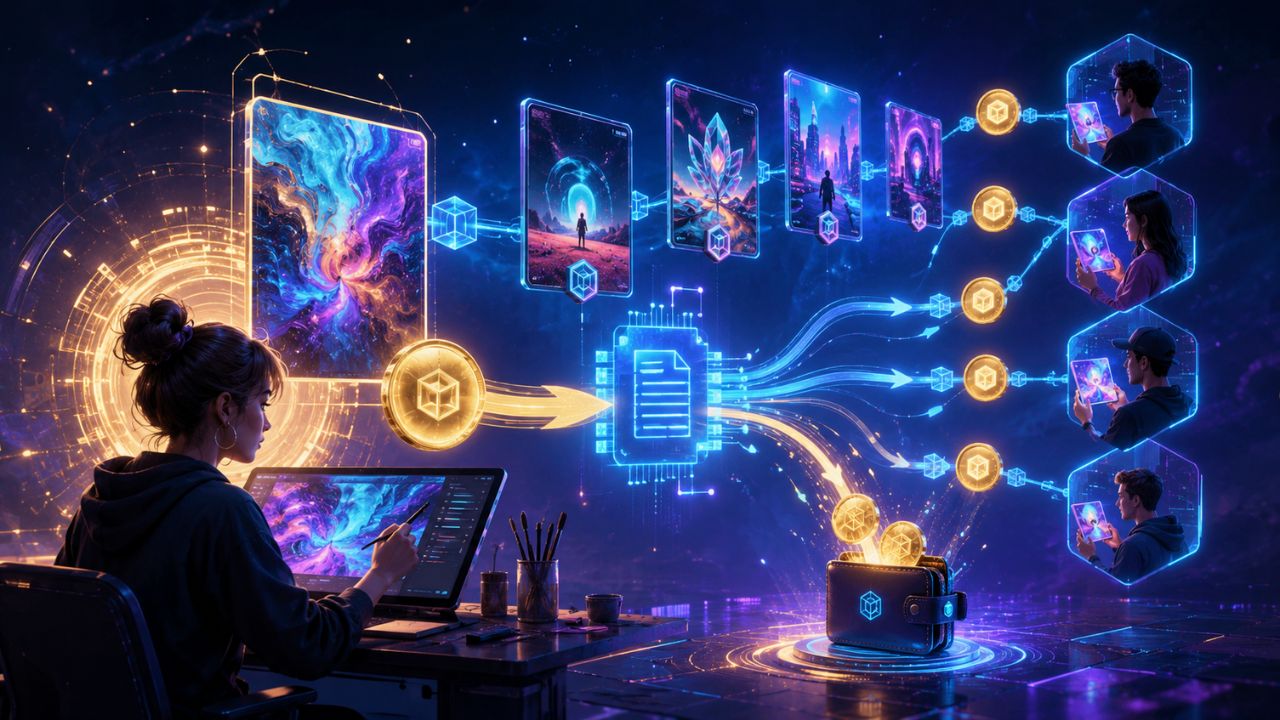
If you are an artist, musician, game developer, collector, or brand exploring Web3, NFT Royalties can sound like one of the biggest promises of the NFT world: create once, sell once, and potentially earn again when the work is resold.
That idea is powerful. For decades, many creators watched their work gain value in secondary markets without sharing in the upside. A painting might sell for $500 early in an artist’s career and later resell for $50,000, while the original artist receives nothing from that resale. NFTs introduced a new model where creator royalties could be attached to digital assets and paid when those assets changed hands.
But the reality is more complicated than the early hype suggested. NFT royalty fees are not always automatic, not always enforceable, and not guaranteed across every marketplace. In many cases, they depend on the smart contract, marketplace policy, blockchain standards, buyer behavior, and the way a collection is set up.
This guide explains how NFT creator royalties work, why they matter, where they fall short, and how creators and collectors can think about them more realistically.
NFT Royalties Explained in Simple Terms
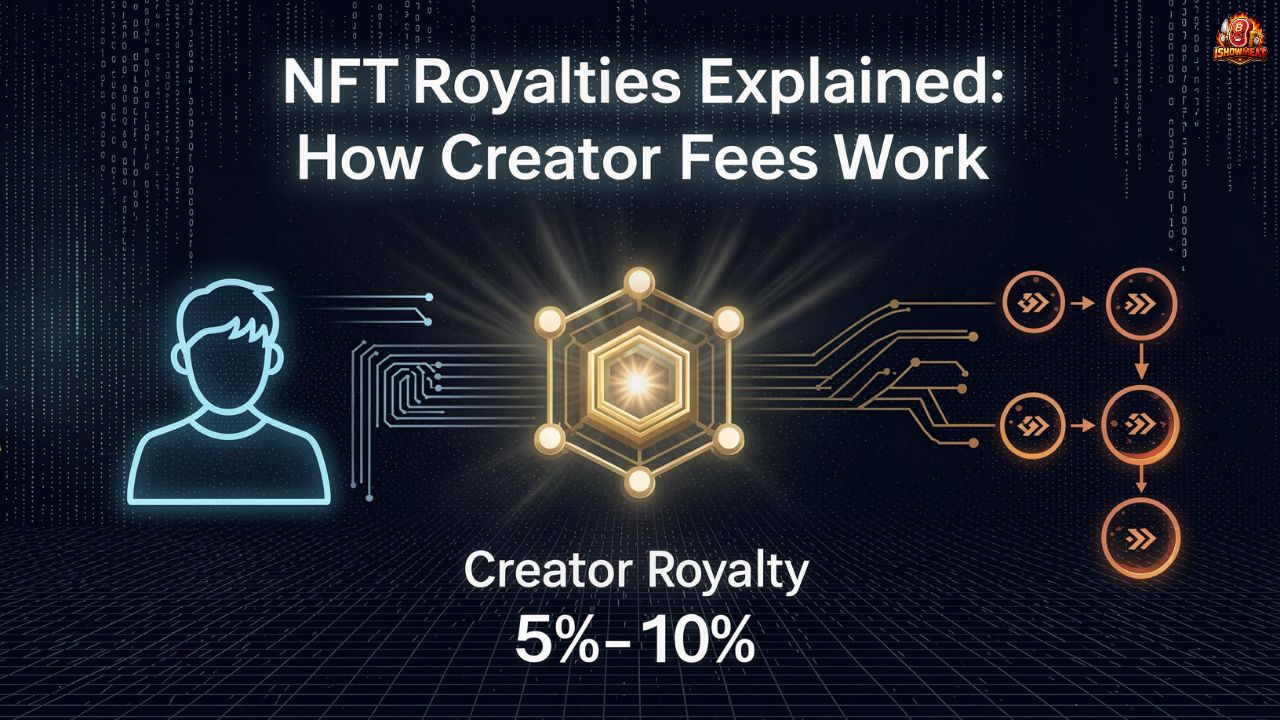
NFT Royalties are payments made to a creator, project, rights holder, or designated wallet when an NFT is resold after the original sale.
For example, imagine a digital artist sells an NFT for $1,000. The artist sets a 5% royalty. Later, the buyer resells that NFT for $2,000. If the royalty is honored, the creator receives $100 from that resale.
The basic formula is simple:
Royalty amount = resale price × royalty percentage
So if an NFT resells for $10,000 and the royalty is 7.5%, the creator would receive $750, assuming the marketplace or smart contract honors that royalty.
This is different from the initial sale. The first sale is usually called the primary sale. Any later sale between collectors is usually called a secondary sale. Royalties are generally associated with those secondary transactions.
Common royalty percentages often range from 2.5% to 10%, though the exact number depends on the creator, collection, platform, and market norms. A higher royalty can support the creator, but it may also make traders less willing to buy or resell if they feel the total transaction cost is too high.
How NFT Royalties Work Behind the Scenes
NFT royalties are usually connected to a few moving parts:
- The NFT smart contract
- The royalty standard or metadata
- The marketplace where the NFT is sold
- The wallet address receiving payments
- The blockchain network
- The buyer and seller transaction
The smart contract may include royalty information, such as the creator’s wallet address and preferred royalty percentage. Some NFTs use standards such as ERC-2981, which gives marketplaces a standardized way to read royalty information.
However, this is where beginners often get confused: a royalty standard can tell a marketplace what the creator wants, but it may not force every marketplace to pay it.
In many NFT ecosystems, royalty payment depends on marketplace support. If a marketplace chooses not to honor royalties, or if a sale happens through a direct wallet-to-wallet transfer, the creator may not receive anything.
That is why the phrase “built into the blockchain” can be misleading. Some royalty information can be stored or signaled on-chain, but practical enforcement often depends on marketplace design and contract restrictions.
Primary Sales vs. Secondary Sales
To understand blockchain royalties, it helps to separate the two main types of NFT sales.
Primary Sales
A primary sale happens when the NFT is sold for the first time. This may happen through:
- A mint page
- A launchpad
- A marketplace drop
- A private sale
- A brand or artist website
The creator typically receives the primary sale revenue, minus platform fees, gas fees, payment processing costs, or other expenses.
For many creators, the primary sale is still the most predictable income source. Royalties are helpful, but they should usually be treated as potential future income rather than guaranteed revenue.
Secondary Sales
A secondary sale happens when the original buyer sells the NFT to someone else.
This is where secondary sales royalties may apply. If a collection has a 5% royalty and the marketplace honors it, the creator receives 5% of the resale price.
Secondary royalties are especially important for:
- Digital artists
- Music NFT creators
- Game asset designers
- Membership NFT projects
- Collectible brands
- PFP communities
- Independent studios
- Collaborative projects with multiple contributors
They can create ongoing upside for creators if a collection becomes more valuable over time.
Why NFT Royalties Became So Important for Creators
The appeal of NFT creator royalties is easy to understand. They give creators a way to participate in the long-term value of their work.
In traditional creative markets, the first buyer often captures most of the resale upside. A collector may buy early, hold the work, and sell later for a major profit. The artist’s reputation helped create that value, but the artist may not share in it.
NFTs changed the conversation by making resale participation technically easier. This matters because digital creators often struggle with:
- One-time payment models
- Unauthorized copying
- Platform dependency
- Unstable income
- Lack of resale participation
- Weak direct relationships with fans
- Limited leverage with intermediaries
Royalties gave creators a new way to think about digital ownership. Instead of treating each sale as a single isolated transaction, NFT collections could support a more ongoing relationship between creator and community.
For musicians, royalties can help fund future releases. For game developers, they can support asset updates or new content. For visual artists, they can reward early work that gains recognition later. For brands, they can help fund community benefits, events, or membership perks.
Why NFT Royalties Are Controversial
Despite the benefits, NFT royalties are one of the most debated topics in the NFT market.
The disagreement usually comes down to incentives.
Creators want royalties because they support sustainable income and long-term project development. Collectors may support them because they want artists and teams to keep building. Traders, however, often prefer lower fees because they buy and sell frequently.
A 5% royalty may seem small to a casual collector. But for a high-volume trader, that cost can significantly affect profit margins, especially when combined with marketplace fees, gas fees, price volatility, and bid-ask spreads.
This tension led some marketplaces to make royalties optional, reduce them, or create different enforcement systems. As a result, the NFT industry moved away from the early assumption that royalties would always be automatically paid.
The Creator Perspective
Creators often argue that royalties are fair because they continue to build value after the first sale. A project may gain attention because the artist keeps producing work, the team adds utility, or the community grows.
From this perspective, royalties are not just a fee. They are part of the relationship between creators and collectors.
The Collector Perspective
Collectors may support royalties when they believe the creator is active, transparent, and adding value. However, they may object if the royalty feels too high or if the project team stops delivering.
Collectors often ask: “What am I getting in return for this fee?”
That question matters. A royalty model works better when buyers understand how the funds support the creator, collection, or community.
The Trader Perspective
Traders tend to focus on liquidity and transaction costs. If royalties are high, some traders may move to platforms where royalties are optional or lower.
This can reduce creator income and fragment trading activity across marketplaces.
Are NFT Royalties Automatic?
Sometimes, but not always.
This is one of the most important things to understand about NFT royalty payments. Many people assume royalties are automatic because NFTs use smart contracts. In practice, royalty behavior depends on how the NFT was created, where it is sold, and whether the sale method supports royalty payment.
There are three common situations.
1. Marketplace-Honored Royalties
A marketplace reads the royalty information and pays the creator when a resale occurs.
This is the simplest experience for creators. The buyer pays, the seller receives proceeds, and the creator receives the royalty.
2. Optional Royalties
Some marketplaces let buyers or sellers decide whether to pay royalties. In this model, a creator may set a preferred royalty, but the final payment may depend on user choice.
This creates flexibility for traders, but uncertainty for creators.
3. Enforced Royalties Through Contract Design
Some newer NFT contracts try to restrict transfers or sales in ways that make royalty enforcement stronger. These systems may limit trading to approved marketplaces or use special transfer controls.
This can protect creator earnings, but it may also reduce marketplace compatibility, limit liquidity, or create friction for collectors.
Common NFT Royalty Standards and Contract Models
NFT royalties are not handled the same way on every chain or marketplace. Still, several terms come up often.
ERC-2981
ERC-2981 is a commonly discussed Ethereum royalty standard. It provides a way for NFT contracts to communicate royalty information, such as who should be paid and how much.
The key point is that ERC-2981 helps standardize royalty information, but it does not automatically force payment in every possible transaction. A marketplace still has to support and honor that information.
For creators, ERC-2981 can be useful because it makes royalty details easier for compatible marketplaces to read. But it should not be mistaken for a universal guarantee.
ERC-721 and ERC-1155
Many NFTs use ERC-721 or ERC-1155 token standards.
ERC-721 is often used for one-of-one or individually unique NFTs. ERC-1155 is often used for semi-fungible items, gaming assets, editions, and collections where multiple copies may exist.
These standards define how tokens work, but royalties usually require additional royalty logic, marketplace support, or separate standards.
ERC-721C and ERC-1155C
Some newer contract approaches, such as ERC-721C and ERC-1155C, are designed to give creators more control over transfer rules and royalty enforcement. These models may help creators protect earnings on compatible marketplaces, but they can also introduce trade-offs around openness, composability, and where the NFT can be traded.
Creators should understand those trade-offs before choosing a contract model.
How Marketplaces Affect NFT Royalties
NFT marketplaces play a major role in whether royalties are paid.
A creator may set a royalty at 5%, but the marketplace determines whether that royalty is displayed, honored, optional, or enforceable. Marketplace policies can also change over time.
When evaluating a marketplace, creators should look at:
- Whether royalties are supported
- Whether royalties are mandatory or optional
- Whether the marketplace supports the relevant royalty standard
- Whether creator earnings can be split between wallets
- Whether royalties are paid immediately
- Which chains and contract types are supported
- Whether enforcement requires special contract settings
- How marketplace fees interact with royalty fees
Buyers and collectors should also pay attention. A marketplace with lower fees may not support creators in the same way. A marketplace that enforces royalties may have higher transaction costs but better alignment with creators.
There is no single perfect answer. The best choice depends on whether the priority is creator income, liquidity, low-cost trading, broad compatibility, or community values.
Benefits of NFT Royalties
NFT royalties can provide real advantages when they are designed and communicated well.
Ongoing Creator Income
The most obvious benefit is ongoing income from resales. This can help creators fund future work, maintain a project, reward collaborators, or continue building community value.
For independent creators, even modest royalties can matter. A few secondary sales may help cover software, studio time, marketing, legal review, or production costs.
Better Alignment Between Creators and Collectors
Royalties can align incentives. If the creator benefits when the collection grows, they may have more reason to keep building.
Collectors may also feel better knowing that part of their purchase supports the original creator.
Support for Long-Term Projects
Some NFT collections are not just static artwork. They may include events, games, memberships, media, physical products, or access rights.
Royalties can help fund those ongoing commitments, though creators should be careful not to promise more than they can realistically deliver.
Easier Revenue Sharing
Royalty payments can sometimes be split between multiple wallets. This is useful for collaborations involving artists, developers, musicians, designers, studios, licensors, or community treasuries.
For example, a music NFT might split royalties among a vocalist, producer, visual artist, and project wallet.
Recognition of Creative Value
Royalties reinforce the idea that creative work can continue generating value after the first sale. That is especially meaningful in digital markets, where ownership, attribution, and monetization have historically been difficult.
Drawbacks and Limitations of NFT Royalties
Royalties are useful, but they are not a magic solution.
They May Not Be Enforced Everywhere
The biggest limitation is enforcement. If a marketplace does not honor royalties, the creator may not get paid.
This is why creators should avoid building a business plan based only on expected secondary royalties.
High Royalties Can Reduce Trading Activity
If royalty fees are too high, buyers may hesitate. Traders may avoid the collection or move to venues with lower fees.
A royalty that feels fair to the creator may feel expensive to the market.
Marketplace Policies Can Change
Marketplace rules are not permanent. A platform may change its royalty policy, fee structure, enforcement tools, or supported contract types.
Creators should keep track of marketplace updates and avoid assuming that today’s policy will stay the same forever.
Royalties Do Not Guarantee Project Success
Royalties only matter if people continue buying and selling the NFT. If demand falls, resale activity may drop and royalty income may be minimal.
A strong collection still needs audience trust, good creative work, clear communication, and a reason for people to care.
Legal and Tax Complexity
NFT transactions can create tax and reporting obligations. Royalties may be treated as income, and NFT sales may create gains or losses depending on the situation.
Creators, collectors, and businesses should keep records and consult qualified professionals when needed.
How Much Should NFT Royalties Be?
There is no perfect royalty percentage. The right amount depends on the collection type, buyer expectations, creator involvement, and market conditions.
Here is a practical way to think about it:
| Royalty Range | Common Use Case | Possible Benefit | Possible Drawback |
|---|---|---|---|
| 0%–2.5% | Trader-focused collections, high-volume assets | Lower friction for resale | Less creator income |
| 2.5%–5% | Art, collectibles, community projects | Balanced and common-feeling | May still deter some traders |
| 5%–7.5% | Creator-led projects with ongoing work | Better support for future development | Higher transaction cost |
| 7.5%–10%+ | Premium art, memberships, specialized projects | Stronger creator funding | Can reduce liquidity if buyers see it as excessive |
For many collections, 5% is a common starting point. But that does not mean it is always right.
A one-of-one artist with strong collector relationships may justify a higher royalty. A gaming asset that needs high trading volume may work better with a lower royalty. A project with a community treasury may need a clear explanation of how royalty funds are used.
The most important thing is transparency. Buyers are more likely to accept royalties when they understand the purpose.
How Creators Can Set Up NFT Royalties
The exact steps depend on the blockchain, marketplace, and contract tools used. Still, the process usually follows this pattern.
1. Choose the Right Blockchain and Marketplace
Start by deciding where your audience is most likely to buy.
Ethereum may be preferred for certain art and collectible communities. Solana, Polygon, Base, Bitcoin Ordinals-related platforms, and other ecosystems may appeal to different audiences, cost preferences, or use cases.
Look at marketplace royalty support before minting. Do not assume every platform handles royalties the same way.
2. Decide on a Fair Royalty Percentage
Choose a percentage that supports your goals without making resale feel unattractive.
Ask yourself:
- Will I continue creating value after launch?
- Will royalties fund future work, community benefits, or maintenance?
- Is this a high-volume trading collection or a long-term collector piece?
- What royalty range feels normal in this niche?
- Would I still buy this NFT if I were a collector?
A fair royalty is easier to defend than an aggressive one.
3. Use a Compatible Smart Contract
If royalty support matters to your project, use a contract that supports recognized royalty standards or enforcement tools where appropriate.
Creators should understand whether their contract merely signals royalties or actively restricts certain transfers. Those are very different design choices.
If you are not technical, work with a reputable developer, launchpad, or no-code minting platform. Review the contract carefully before launch.
4. Add the Correct Royalty Wallet
Make sure the royalty recipient wallet is secure, accessible, and controlled by the right person or entity.
For teams, consider whether royalties should go to:
- The founder’s wallet
- A company wallet
- A multi-signature wallet
- A collaborator split contract
- A community treasury
- A rights-holder wallet
A multi-signature wallet may be safer for projects with multiple stakeholders because it reduces the risk of one person controlling all funds.
5. Communicate Clearly With Buyers
Tell collectors what the royalty is and why it exists.
For example:
“This collection includes a 5% creator royalty intended to support future artwork, collector events, and ongoing project maintenance.”
That is clearer than hiding the fee until checkout.
6. Keep Records
Creators should track primary sales, royalty payments, wallet addresses, marketplace reports, transaction IDs, gas fees, and related expenses.
Good records help with accounting, taxes, collaborator payments, and business planning.
What Buyers and Collectors Should Know
If you buy NFTs, royalties affect your total cost and resale outcome.
Before purchasing, check:
- The royalty percentage
- Marketplace fees
- Gas or network fees
- Whether royalties are optional or enforced
- The creator’s track record
- Whether the project is still active
- What rights or benefits the NFT includes
- How liquid the collection is
A royalty is not automatically bad. It may support the creator and strengthen the project. But it should be part of your buying decision.
If you plan to trade actively, royalties matter more because repeated buying and selling can make fees add up. If you are buying art you love and plan to hold long term, the royalty may be less important than the artist relationship and provenance.
Real-Life Examples of NFT Royalty Use Cases
NFT royalties can show up in many creative and commercial models.
Digital Art
A visual artist sells a limited collection of 100 pieces. Each resale pays a 7.5% royalty when supported by the marketplace. The artist uses those funds to create new work, host collector calls, and produce physical prints.
Music NFTs
A musician releases tokenized album art or access passes. Royalties from resales may help fund future recording, mixing, tour content, or fan experiences.
Creators should be especially careful with rights, splits, and licensing in music because multiple parties may have claims to a song or recording.
Gaming Assets
A game studio sells NFT skins, weapons, land, or characters. A low royalty may support ongoing development while keeping player-to-player trading active.
For gaming, too high a royalty can frustrate users because assets may trade frequently.
Membership NFTs
A brand launches NFTs that provide access to events, content, or private community spaces. Royalties help fund ongoing member benefits.
This model works best when the team is clear about what holders receive and what is not guaranteed.
Collaborative Collections
An artist, animator, developer, and writer launch a collection together. Royalties are split among collaborators using designated wallets or payment-splitting tools.
This can reduce disputes if the split is agreed on before launch.
NFT Royalties vs. Traditional Royalties
NFT royalties are inspired by traditional royalty models, but they are not identical.
| Feature | Traditional Royalties | NFT Royalties |
|---|---|---|
| Common industries | Music, publishing, film, licensing | Digital art, collectibles, gaming, memberships |
| Payment trigger | Sales, streams, licenses, usage | Usually secondary NFT sales |
| Enforcement | Contracts, platforms, legal systems | Smart contracts, marketplaces, platform rules |
| Transparency | Often limited and delayed | Often visible on-chain or in marketplace records |
| Payment timing | May be monthly, quarterly, or delayed | Can be near-instant when supported |
| Main limitation | Complex intermediaries | Inconsistent enforcement |
Traditional royalties are often backed by legal agreements and industry systems. NFT royalties are often more transparent, but they may depend heavily on technical and marketplace support.
That makes NFT royalties innovative, but not automatically stronger in every situation.
Legal, Tax, and Compliance Considerations
NFTs can involve tax, intellectual property, consumer protection, and securities-related questions. This section is for general education only and should not be treated as legal, tax, or financial advice.
Creators and collectors in the United States should be especially careful about three areas.
Taxes
Digital asset transactions may be taxable. NFT creators may owe tax on income from sales or royalties. Collectors may have gains or losses when selling NFTs, trading them, or using cryptocurrency to buy them.
Because NFT activity can involve multiple wallets, marketplaces, chains, and tokens, recordkeeping is essential.
Keep records of:
- Purchase price
- Sale price
- Dates
- Wallet addresses
- Transaction hashes
- Marketplace fees
- Royalty payments
- Gas fees
- Crypto used for payment
- USD value at the time of transaction
A qualified tax professional can help determine how your activity should be reported.
Intellectual Property Rights
Buying an NFT does not always mean buying the copyright to the underlying art, music, image, or media.
In many cases, the buyer receives ownership of the token, while the creator keeps copyright. Some projects grant commercial rights. Others grant only personal display rights. Some use custom licenses.
Creators should clearly explain what buyers receive. Buyers should read the license before assuming they can use the artwork on products, merchandise, logos, games, or commercial campaigns.
Securities and Investment Risk
Creators should be careful about marketing NFTs as investments or promising future profits. Some regulatory actions have focused on how NFT projects were promoted, what buyers were led to expect, and how secondary market activity was encouraged.
A safer approach is to emphasize the art, access, utility, community, or experience rather than guaranteed financial upside.
Risks and Scams to Watch For
NFT royalties can attract serious creators, but they can also attract scams.
Watch for these red flags:
- Promises of guaranteed passive income
- Claims that royalties will always be paid everywhere
- Anonymous teams asking for large upfront payments
- Unclear royalty wallets
- Fake marketplace links
- Wash trading that creates artificial volume
- Projects that overpromise future utility
- Confusing or missing intellectual property terms
- Pressure to mint quickly before doing research
Creators should also be careful. Scammers may impersonate marketplaces, offer fake collaboration deals, or send malicious links that drain wallets.
Use hardware wallets for valuable assets, verify links carefully, and avoid signing transactions you do not understand.
Common Mistakes Creators Make With NFT Royalties
Setting Royalties Too High
A high royalty may look attractive, but it can reduce buyer interest. If collectors believe resale will be expensive, they may avoid the collection.
Assuming Royalties Are Guaranteed
Royalties may not be honored across all marketplaces. Creators should build revenue plans around primary sales, direct relationships, services, licensing, and other income streams—not royalties alone.
Ignoring Marketplace Policy Changes
Marketplace rules can change. Creators should monitor updates and understand how those changes affect their collections.
Using the Wrong Wallet
Sending royalties to an insecure or personal wallet can create problems later. Teams should consider secure wallet management and clear ownership.
Failing to Explain the Royalty
Collectors are more likely to support royalties when they know what the money funds. Silence creates suspicion.
Overpromising Future Utility
If royalties are tied to future development, creators should be careful. Promising too much can create legal, reputational, and financial risk.
Practical Checklist Before Launching an NFT Collection
Before launching an NFT with royalties, review this checklist:
- Choose the blockchain that fits your audience and budget
- Compare marketplace royalty policies
- Decide whether royalties should be optional, signaled, or enforced
- Choose a fair royalty percentage
- Use a contract that supports your royalty goals
- Confirm the royalty wallet address
- Set up collaborator splits if needed
- Write clear buyer terms and license language
- Explain what royalty funds support
- Avoid investment-style promises
- Keep detailed transaction records
- Plan income beyond secondary royalties
- Prepare wallet security procedures
- Review tax and legal questions with qualified professionals
This may feel like a lot, but it is easier to handle before launch than after a collection is already live.
Alternatives to NFT Royalties
Because royalties are not always reliable, creators should consider additional revenue models.
Primary Sales
The initial mint or sale remains the most predictable revenue event. Price the primary sale carefully and avoid depending on future resale activity.
Limited Editions
Artists can release limited editions at different price points. This creates accessibility while preserving scarcity.
Memberships
Creators can offer paid memberships, private communities, courses, workshops, events, or collector programs outside the NFT itself.
Licensing
Creators can license artwork, music, characters, or brand assets for commercial use.
Physical Products
NFTs can be connected to prints, books, apparel, vinyl records, toys, or event merchandise.
Commissions and Services
An NFT collection can bring attention to a creator’s broader work, including commissions, consulting, design, production, or speaking opportunities.
Subscriptions and Patronage
Some creators may use platforms outside the NFT market for recurring support. This can be more stable than resale-based income.
Royalties are best viewed as one part of a broader creator business model, not the entire foundation.
How to Decide Whether NFT Royalties Make Sense for You
Use this simple framework.
NFT Royalties May Be a Good Fit If:
- You are building a long-term creative brand
- Your work may gain value over time
- You have an active collector community
- You plan to keep creating after launch
- You can explain how royalties support the project
- Your marketplace and contract support your royalty goals
- You understand the risks and limitations
They May Not Be a Good Fit If:
- You need guaranteed income
- Your buyers are mostly short-term traders
- You are unwilling to manage ongoing communication
- You do not understand the tax or legal implications
- You are relying on royalties to fund promises you may not be able to keep
- Your collection needs maximum liquidity across all platforms
The best royalty strategy is honest, flexible, and aligned with the audience.
The Future of NFT Royalties
The future of NFT Royalties will likely be shaped by a mix of technology, marketplace competition, creator expectations, collector behavior, and regulation.
Early NFT culture treated royalties as a major creator breakthrough. Later, competitive marketplaces pushed toward lower or optional fees. Now, the market is more nuanced. Some creators want stronger enforcement, while some collectors want open trading and lower friction.
Several trends are worth watching:
- More royalty-aware smart contracts
- Creator-controlled marketplaces
- Optional royalty models
- Marketplace-specific enforcement tools
- Better wallet and split-payment infrastructure
- More careful legal language
- Stronger collector expectations around transparency
- Greater focus on real utility, art quality, and community trust
The most sustainable projects will likely be the ones that do not treat royalties as free money. Instead, they will use royalties as part of a thoughtful relationship between creators and collectors.
FAQ
Do NFT royalties pay forever?
Not always. Some projects describe royalties as ongoing, but actual payment depends on marketplace support, contract design, and where the NFT is sold. A creator may receive royalties on some resales and not others.
Who pays NFT royalties?
In practice, the royalty usually comes out of the transaction economics between buyer, seller, and marketplace. Depending on the platform, it may be shown as part of the buyer’s cost, deducted from the seller’s proceeds, or handled through marketplace settlement.
Can NFT royalties be changed after launch?
Sometimes. It depends on the contract and marketplace. Some collections allow royalty settings to be updated by the owner or admin wallet. Others may be fixed. Buyers should check collection details, and creators should be transparent about any changes.
What is a normal NFT royalty percentage?
Many NFT royalties fall somewhere between 2.5% and 10%. A common range is around 5%, but the right percentage depends on the collection, audience, trading behavior, and creator involvement.
Are NFT royalties taxable?
They may be taxable, depending on your situation and country. In the United States, digital asset income and transactions can create tax obligations. Creators and collectors should keep detailed records and consult a qualified tax professional when needed.
Do NFT royalties work on every marketplace?
No. Some marketplaces honor royalties, some make them optional, and some require specific contract types for enforcement. Marketplace policies can also change over time.
Can buyers avoid NFT royalties?
In some cases, yes. Buyers or sellers may use platforms where royalties are optional or trade in ways that do not trigger marketplace royalty payment. This is one reason creators should not assume royalties are guaranteed.
Are NFT royalties good or bad?
They can be good when they fairly support creators and are clearly explained. They can become a problem if they are too high, poorly communicated, or treated as guaranteed income. The best approach depends on the creator, collection, marketplace, and collector expectations.
Conclusion
NFT Royalties remain one of the most important and misunderstood parts of the NFT ecosystem. At their best, they help creators share in the long-term value of their work, fund future projects, and build stronger relationships with collectors.
But they are not automatic magic. Royalties depend on smart contracts, marketplace policies, buyer behavior, and ongoing trust. Creators should use them thoughtfully, explain them clearly, and avoid relying on them as the only revenue source. Collectors should understand how royalties affect total cost, resale value, and creator support.
The healthiest view is balanced: NFT royalties can be a useful creator tool, but they work best when paired with strong work, honest communication, secure technology, and realistic expectations.