Article
Walk into any online conversation about money, tech, or investing today, and you will run into the word “代币” almost immediately. For many newcomers, this word creates instant confusion. Is it just a fancy term for a digital coin? Is it a type of stock? Or is it something completely different that requires a computer science degree to understand? You are not alone if you have nodded along during a conversation about crypto tokens while secretly having no idea what separates one from another.
In simple reality, a 代币 is a digital unit of value built on top of an existing blockchain. Think of it as a ticket, a coupon, or a store credit that lives entirely on the internet and operates using programmable rules. Unlike a nation’s currency that a central bank issues, a token is typically created by a project, a community, or a decentralized application. Understanding this concept is the entry point to grasping why the wider world of 加密货币 has grown far beyond just digital cash.
This guide will walk you through every important layer of what tokens are. We will explore the different types, from 稳定币 that aim to hold a steady price, to community-driven projects like 柴犬幣 and ape幣. We will also look at how tokens power entire ecosystems like Solana, how to track them using tools like 加密货币走势图 and 加密貨幣市值排行, and how to approach this space with caution rather than blind excitement. There will be no hype, no promises of profit, and no complicated jargon without a plain-English explanation. By the end, you will have a clear mental model of the token landscape and feel confident making sense of the noise.
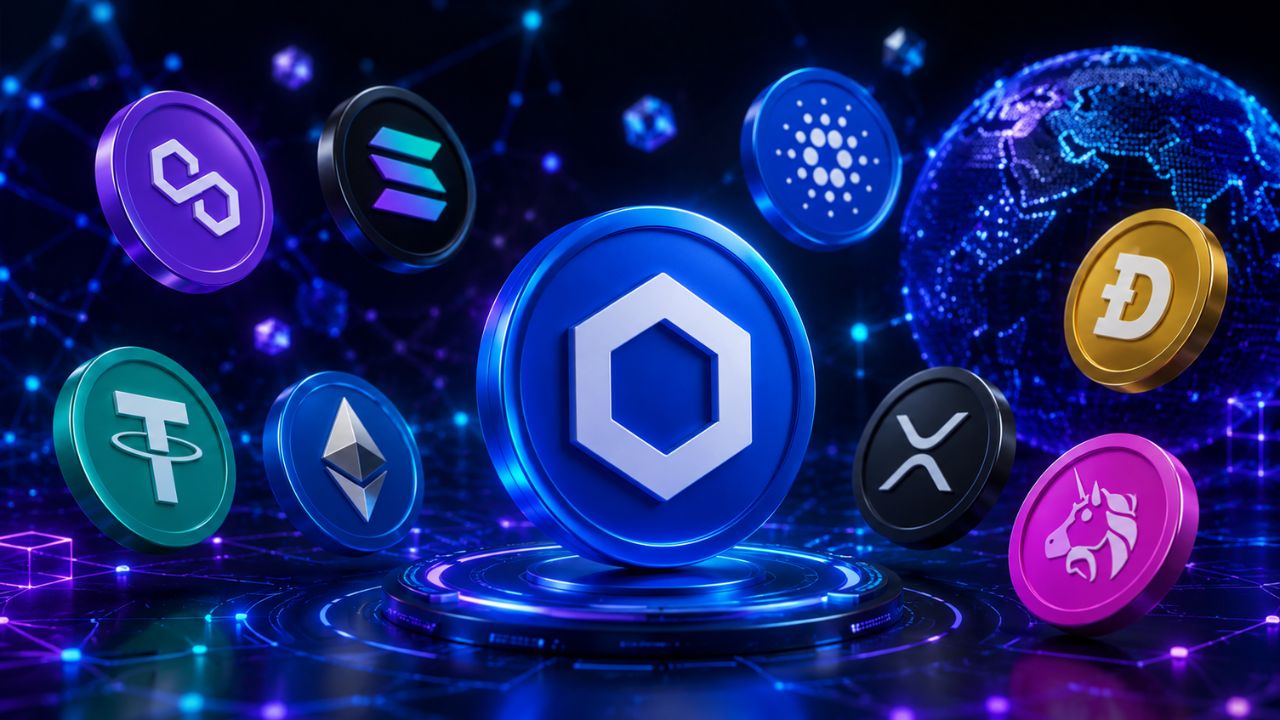
What Actually Is a Token
Before tokens can make any real sense, you need a crisp definition. Many people use the words “coin” and “token” as if they are identical. In casual conversation, that may work. But when you are trying to make good decisions, the difference matters.
A coin, in the strict sense of 加密货币, operates on its own native blockchain. Bitcoin operates on the Bitcoin network. Ether operates on Ethereum. These coins are the native fuel that pays for transactions and security on their respective networks.
A 代币, by contrast, does not have its own blockchain. It is created using a smart contract on an existing network, most commonly Ethereum today. The developer writes a set of rules—how many tokens exist, how they are created, how they can be transferred—and deploys those rules on top of a blockchain that already functions. This is why you see thousands of tokens built on Ethereum, on Solana, and on BNB Chain, each one relying on the host network’s infrastructure to exist.
This distinction is practical. It means tokens are generally faster and cheaper to create than launching a whole new blockchain. It also means the security and cost of a token depend heavily on the blockchain it calls home. A token on a fast, low-cost network like Solana will behave very differently from a token on Ethereum during periods of high network congestion.
Coins vs. Tokens: Why the Confusion Persists
The line between coin and 代币 gets blurry in real-world discussion. Even large price-tracking websites often group everything under the umbrella term 虛擬貨幣 or 虛擬幣, listing them side by side without always separating them clearly. This is not necessarily wrong. For the average person checking 加密货币行情 or a 加密货币走势图, what matters most is the price, market cap, and general trend, not the underlying technical architecture.
But when you move beyond price watching, the difference starts to influence real outcomes. If a project tells you it has a “coin,” ask whether it has an independent network. If it does not, it is a token. Tokens can represent voting power in a decentralized protocol, a share of protocol fees, an in-game item, or a ticket to an event. This programmability makes tokens far more flexible than simple payment coins.
In the United States, this classification also increasingly carries regulatory weight. Regulators have generally treated Bitcoin and Ethereum as commodities, while many tokens—especially those that promise a share of profits—can come under heavier scrutiny. This is not legal advice, but it is a reminder that vocabulary matters in ways that go beyond Reddit arguments.
Why Tokens Matter in Modern Crypto
Without tokens, the blockchain industry would still be mostly about sending digital cash from one wallet to another. Tokens unlocked entirely new use cases. They allow decentralized applications to reward users, align incentives across strangers on the internet, and give communities ownership over software.
Consider three practical examples. A lending protocol can issue tokens that let users vote on which assets to list as collateral. A decentralized exchange can reward liquidity providers with trading-fee tokens. A gaming studio can issue tokens that serve as in-game currency, portable across different games built on the same chain. In each case, the 代币 is not just a speculative asset. It is a tool that coordinates behavior.
This is why the total value recorded on 加密貨幣市值排行 trackers includes not only coins like Bitcoin but also thousands of tokens. The rise of decentralized finance, gaming, and social applications has turned tokens into programmable coordination machines. They are not all valuable, and plenty will fail. But the underlying capability is what makes the sector different from a simple digitized version of gold.
Major Types of Tokens You Will Encounter
Stablecoins: Tokens Designed to Hold a Fixed Value
The most widely used type of 代币 in the real world is the 稳定币. These are tokens engineered to maintain a stable price, typically pegged to a fiat currency like the U.S. dollar. For anyone who has looked at a 加密货币走势 chart and felt motion sickness, stablecoins are the calm eye of the storm.
In practice, stablecoins fall into a few categories. Centralized stablecoins, such as USDC and USDT, are backed by reserves held by a company. Algorithmic stablecoins attempt to hold a peg through code and market incentives, a design that has produced dramatic failures as well as successes. Crypto-collateralized stablecoins like DAI are backed by other crypto assets in overcollateralized vaults.
Stablecoins are the default dollar of the 加密貨幣 ecosystem. Traders use them to exit volatile positions without converting back to bank dollars. Remittance senders use them to move value across borders quickly. DeFi protocols use them as the backbone of lending markets. Despite their name, stablecoins carry their own risks, including reserve opacity, redemption freezes, and smart-contract bugs. At the time of writing, regulation in the United States around stablecoin issuers is actively evolving.
Utility Tokens: Access and Service Credits
A utility token serves as the internal currency of a specific application or network. Think of it like an arcade token. It is not designed primarily as an investment. It is designed to let you do something. You might use utility tokens to pay for transaction fees, access premium features, or interact with smart contracts.
Filecoin, for example, is a utility token used to pay for decentralized storage. Basic Attention Token (BAT) is used within the Brave browser ecosystem to reward attention. These tokens do not promise any share of company profits, and their value tends to rise or fall based on the actual demand for the underlying service. From a U.S. perspective, a utility token with genuine non-speculative demand is in a much less legally complicated position than a token that acts like an unregistered security.
Governance Tokens: Voting Power on the Internet
Governance tokens represent something new in the world of organizational design. Instead of company shares that come with legal rights enforced by courts, governance tokens grant voting rights enforced by code. Holders can vote on protocol upgrades, fee adjustments, treasury allocations, and other decisions.
Uniswap’s UNI token is a well-known example. Holders can propose and vote on changes to the decentralized exchange’s protocol. In many cases, voting power is proportional to the number of tokens held, which means large holders carry significantly more influence. Critics point out that governance tokens often concentrate power in the hands of insiders and venture capital firms, not a broad community. Supporters see them as an experiment in internet-native democracy that will take years to mature.
Security Tokens: Digital Representations of Traditional Assets
Security tokens are the most regulated category and remain relatively small compared to the rest of the market. A security token represents ownership in an external asset, such as equity in a company, a share of real estate, or a claim on revenue. In the United States, these tokens fall squarely under securities law, meaning they must comply with registration, disclosure, and accredited-investor rules.
The promise of security tokens is still largely untapped. If the legal infrastructure matures, they could allow for 24/7 trading of private assets, fractional ownership of expensive real estate, and streamlined cap-table management. Today, however, liquidity is thin, and most retail investors encounter security tokens far less often than utility or governance tokens.
Solana and Its Native Coin: What Beginners Need to Know
One of the questions that consistently appears in search queries is some variation of solana是什么币 or simply solana是什么. This question reflects a common entry path. Someone hears that Solana is fast and cheap, sees the ticker SOL, and wants to understand what it actually represents.
SOL is not technically a token in the strict definition we laid out earlier. SOL is the native coin of the Solana blockchain. This is an important distinction. Many people refer to it casually as solana币, and in the context of tracking sol货币 on price charts, that casual usage works fine. But precisely, SOL functions as the native asset that validators stake to secure the network and that users pay as transaction fees.
Solana’s design prioritizes speed and low cost. It uses a unique consensus mechanism called Proof of History, combined with Proof of Stake, to process thousands of transactions per second. This makes Solana a popular home for tokens that would be too expensive to trade on Ethereum during peak periods. A 代币 built on Solana, often called an SPL token, inherits the network’s speed and cost advantages but also depends entirely on Solana’s uptime, which has experienced notable outages in the past.
If you are tracking 加密货币行情 and see SOL listed alongside thousands of tokens, you now know that it sits in a different category. It is the foundational asset of a major layer-1 network, not a token built on top of someone else’s chain.
Meme Tokens, Community Coins, and Speculation
The line between a serious project and a cultural phenomenon has never been blurrier. Meme-inspired tokens like 柴犬幣 (Shiba Inu) and ape幣 (ApeCoin) dominate a significant share of retail attention, especially among younger investors in the United States who entered crypto during the pandemic-era boom.
Shiba Inu started explicitly as a Dogecoin competitor, a token built on Ethereum with an enormous supply and no serious claim to technological innovation. Its value was driven almost entirely by community energy, social-media virality, and the hope that early buyers would find later buyers at a higher price. Over time, the project has tried to add utility, including a decentralized exchange and a layer-2 network, though the core identity remains a speculative community token.
ApeCoin emerged from the Bored Ape Yacht Club ecosystem and serves as a governance and utility token for the broader community. It is used for voting, for some payments, and increasingly as a coordination tool for the brand’s expanding universe of games, events, and merchandise. Calling it simply a meme token undersells the level of commercial activity around the Yuga Labs ecosystem, but calling it a utility token without mentioning the heavy speculative layer would be naive.
What these tokens share is a high sensitivity to sentiment shifts. A 加密货币走势图 for these assets can look like a long plateau followed by sudden, violent spikes or crashes. They are not appropriate as the core of a long-term portfolio for most people. But ignoring their cultural relevance would mean ignoring a large part of what newcomers actually trade.
How to Track Token Prices and Market Caps
Making sense of 加密货币行情 requires more than checking a single number. Price alone tells you nothing about the size, liquidity, or trustworthiness of a token. Two metrics you will see constantly are price and market capitalization. Market cap is calculated by multiplying the current price by the circulating supply. It is the quickest way to see how the broader market values a project relative to others.
Websites that display 加密貨幣市值排行 and 虛擬貨幣排名 sort projects by this figure. Bitcoin typically sits at the top, followed by Ethereum, then a rotating cast of stablecoins, layer-1 coins, and large tokens. Watching how a token moves up or down the 加密貨幣市值 list over weeks can reveal shifts in narrative and capital flow more clearly than short-term price spikes.
For more granular analysis, a 加密货币走势图 is your standard tool. Candlestick charts, moving averages, and volume bars can help you see whether a move is happening on strong participation or thin air. No chart predicts the future, but charts do reveal where large buyers and sellers have historically stepped in. Many U.S.-based traders also follow the total crypto market cap chart as a gauge of overall risk appetite.
A practical habit is to always check the token’s market cap rank and 24-hour trading volume before drawing any conclusions from price alone. A low-cap token can double in price easily on tiny volume but can crash just as fast the moment any holder wants to sell.
Exchanges and Where Tokens Are Traded
Tokens do not trade in a vacuum. They trade on exchanges. And when most people think of a crypto exchange, the name that surfaces first is 币安, or binance. The platform, accessible through 币安官网, grew from a startup in 2017 into the largest 币安交易所 by trading volume globally, though its availability and services for United States residents operate under a separate, more restricted entity.
Using an exchange means trusting a centralized company to hold your funds, execute your trades, and allow you to withdraw. This is convenient and, for most beginners, the simplest way to convert dollars into 虛擬貨幣. The trade-off is that you have custody risk. The exchange could be hacked, freeze your account, or face regulatory action. The misspelling binace occasionally appears in search and as a typo in phishing domains, underscoring the importance of typing URLs carefully and bookmarking the real site.
Decentralized exchanges, or DEXs, are the alternative. They allow token trading directly from your own wallet using automated smart contracts. No identity verification, no account freeze, but also no customer support and a higher risk of user error. The choice between centralized and decentralized exchanges is not absolute. Most experienced participants use both, keeping long-term holdings in personal wallets and using centralized exchanges for liquidity and fiat on-ramps.
Ethereum Token Prices and Notable Tokens to Watch
Price interest often brings people directly to terms like 以太幣價格 and specific tokens that have captured mainstream attention. Ethereum’s native coin, ether, is the gas that powers the most active token ecosystem in existence. Its price tends to influence the entire token market because so many tokens rely on Ethereum’s security and composability.
When ether fees rise, activity migrates to cheaper chains, and tokens on those chains benefit. When ether upgrades go smoothly, confidence across the Ethereum token universe tends to rise. Watching 以太幣價格 is therefore important beyond those who directly hold ether. It serves as a health indicator for the largest token ecosystem.
Beyond ether itself, there are hundreds of prominent tokens that represent specific sectors. 愛達幣 (Cardano’s ADA) is often grouped into these conversations. ADA is the native coin of the Cardano blockchain, a research-driven network that competes with Ethereum and Solana for decentralized application developers. It is not a token but a coin in the strict sense, yet it is listed alongside tokens on every major tracking site. The project’s methodical, peer-reviewed approach has attracted a loyal following in the United States and globally, though its ecosystem of functioning applications has grown more slowly than some alternatives.
Other tokens that have captured recurring interest include Chainlink’s LINK, which provides price data to decentralized applications, and Arbitrum’s ARB, a governance token for a layer-2 scaling network. Each token represents a different bet on which infrastructure the future internet will use.
Risks, Scams, and How to Approach Tokens Responsibly
Any article about tokens that omits risk would be incomplete and, frankly, irresponsible. The token market operates 24/7, is largely uninsured, and offers no guarantees. Prices can go to zero. Projects can be abandoned. Smart contracts can be exploited. Exchanges can collapse. This is not pessimism. It is historical reality.
Rug pulls, where a developer creates a token, hypes it on social media, and then drains the liquidity pool, remain common. Social media is filled with influencers promoting low-cap tokens in exchange for payment, a practice that often leaves retail buyers holding the bag. Phishing scams impersonating 币安官网 or well-known wallet interfaces try to trick you into signing transactions that drain your wallet.
Practical protective steps exist. Never invest more than you can afford to lose completely. Always verify smart contract addresses from official project sources, not from Telegram or Discord links. Consider keeping significant holdings in a hardware wallet. When checking a token’s 加密货币走势, zoom out to the full lifetime chart. If the token is down 95 percent from its peak and volume has dried up, recovery is far from guaranteed.
Regulation in the United States continues to evolve. The Securities and Exchange Commission has brought enforcement actions against multiple token projects and exchanges for alleged securities-law violations. This means the exchange where a token trades today may not offer it tomorrow. It also means token projects that fail to register properly face ongoing legal risk. None of this makes tokens illegitimate. It makes them a frontier market with frontier risk.
A Practical Framework for Evaluating a Token Project
When you encounter a new 代币 and feel the urge to buy based on a chart or a recommendation, a simple framework can slow down your decision and improve it. Ask a handful of questions before acting.
What problem does this token actually solve? If the only answer is that it will go up, walk away. Who controls the supply? A small number of wallets holding a large percentage of tokens can dictate price when they decide to sell. What is the token’s role? If it is a governance token, how much voting power does it actually grant? If it is a utility token, is the underlying product live and used? And crucially, is liquidity deep enough to exit a position without causing major slippage?
This framework will not make you immune to losses, but it will filter out the lowest-quality opportunities. Many people who enter the 加密貨幣 space through tokens like Shiba Inu eventually rotate into more established projects after experiencing the boom-and-bust cycle firsthand. That is a natural learning curve, but the tuition bill is lower if you learn the framework before the cycle, not after.
FAQ
What is the difference between a coin and a token in cryptocurrency?
A coin operates on its own independent blockchain, such as Bitcoin or Solana. A 代币 is built on top of an existing blockchain using a smart contract, without requiring its own network. This makes tokens faster to create but dependent on the host chain for security and fees.
Is a stablecoin really safe?
No financial asset is perfectly safe. 稳定币 aim to maintain a stable value but carry risks including reserve management failures, regulatory actions, smart-contract bugs, and redemption suspensions. Centralized stablecoins rely on the issuer’s integrity, while algorithmic versions have experienced severe depegging events in the past.
How can I check the market cap rank of a token?
You can visit any major tracking website that shows 加密貨幣市值排行 and search for the token by name or ticker. These tools list projects from largest to smallest by market capitalization and typically include price, volume, and supply data.
Where can I safely buy tokens if I live in the United States?
Most U.S. users access tokens through regulated centralized exchanges that operate in compliance with state and federal law. Decentralized exchanges are also available, though they require more technical knowledge and carry no customer support or recovery options. Always ensure you are on the correct 币安官网 or equivalent official domain before logging in.
Why does Solana sometimes appear in token lists if it is a coin?
Market tracking sites often group coins and tokens together for simplicity. solana是什么币 is a common search because the casual user sees SOL listed alongside tokens and assumes the same category. In strict terms, SOL is the native coin of the Solana network, not a token built on top of another chain.
What makes meme coins like Shiba Inu different from utility tokens?
柴犬幣 started primarily as a community-driven speculative asset with massive supply and no core product. Utility tokens are designed to power a specific application or service. Over time, the line can blur as meme projects attempt to build real ecosystems, but the initial intent and risk profile are different.
How often should I check crypto price charts?
There is no single right answer. A 加密货币走势图 can be useful for identifying broader trends, but obsessive checking often leads to emotional decisions. Many long-term participants check weekly or monthly charts rather than intraday movements, unless actively managing a position.
Is Cardano’s ADA a token or a coin?
Cardano’s ADA is a native coin that operates on the Cardano blockchain. It is frequently discussed alongside tokens because it ranks prominently on 加密貨幣市值 lists and trades against them, but technically it does not meet the token definition of being built on an external network.
Conclusion
Tokens are much more than a trending financial product. They represent a programmable layer of the internet that lets communities, developers, and creators coordinate without relying on traditional institutions. Understanding the difference between a coin and a 代币, knowing why 稳定币 exist, and recognizing what terms like solana是什么 actually mean are not just trivia items. They are foundational pieces of knowledge for anyone who wants to navigate the digital economy with eyes wide open.
The landscape changes fast. Prices rise, fall, and sometimes vanish. But the core concepts remain stable. Use tracking tools like 加密货币行情 charts and 加密貨幣市值排行 tables as references, not as prediction engines. Treat every project, from 柴犬幣 to 愛達幣, with the same set of clear, skeptical questions. Stay curious, stay cautious, and never let the fear of missing out override common sense. The information is freely available. The wisdom to use it well is what takes longer to build.